
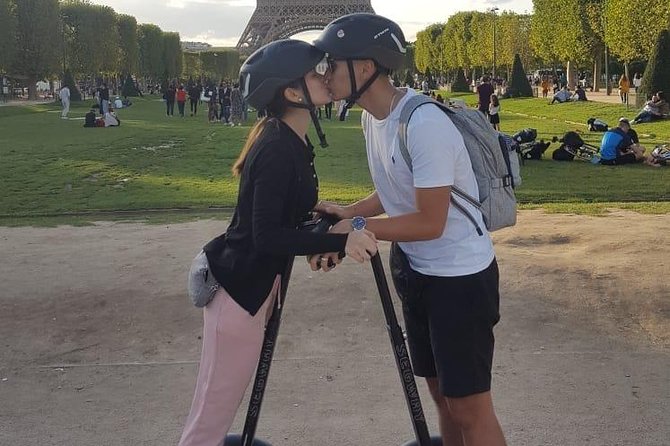
Review · PARIS SEGWAY TOURS
Private Tour: Discover Paris with Local, 3 hours on a Segway
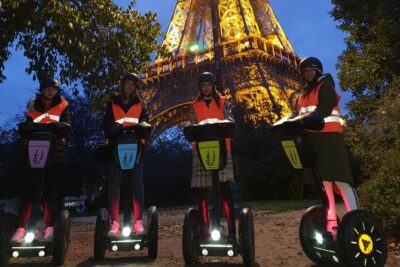
The clever part of this private Paris Segway tour is how much ground you cover without being sealed inside a bus. In three hours, you move between Les Invalides, the Louvre, the Champs-Élysées, the Arc de Triomphe, and the Eiffel Tower, stopping often for photos and short stories.
I like the one-group format, since your guide can adjust the pace and answer your questions. I also like the practical help: guides such as Boris, Sebastian, Ziggy, and Eli have offered restaurant, sightseeing, and neighborhood tips, not just monument facts. The main consideration is simple: this is an outdoor overview, not an inside visit to Paris museums, and $138.78 per person is a serious price for three hours.
Key points to know before booking
- Ten major stops in three hours: You see a strong collection of central Paris sights without spending the day on foot.
- A private guide changes the pace: Your group receives the guide’s full attention, with room for questions and requested stops.
- Mostly exterior sightseeing: Museum admissions are not included, so you see buildings and hear their stories from outside.
- Good first-day orientation: The route gives you a useful map of central Paris before you return to favorite areas on your own.
- Weather gear is supplied: Raincoats, gloves, and warm clothing are available when conditions are poor.
- The tour begins and ends near the Eiffel Tower: Meet at 101 Avenue de la Bourdonnais and return there after the ride.
Why a Segway works well for a first look at Paris
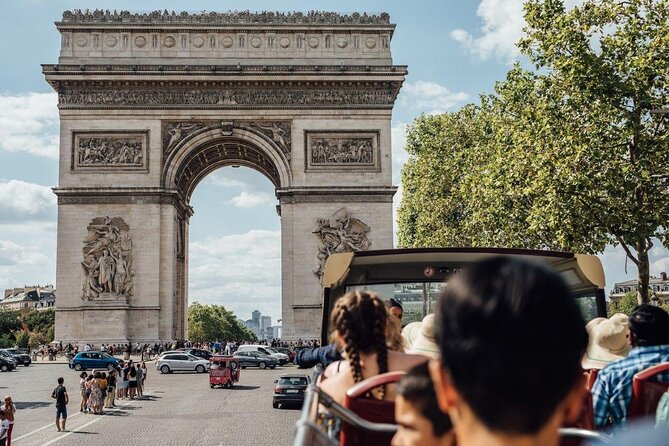
Paris rewards walking, but the city can wear you out quickly. A Segway lets you travel farther than your feet can manage while still moving at street level. You can pause at a bridge, square, or monument for a photo, then continue without the slow shuffle of a large walking group.
This route is built around famous central sights. It does not attempt to take you into every neighborhood or museum. Instead, it gives you a broad sweep of Parisian architecture, royal history, military history, public squares, grand avenues, and river views.
I see this as an especially useful first activity. You can get your bearings early in your stay, note places you want to revisit, and ask your guide how to spend the rest of your time. One guide named Ziggy has adapted the route around places a group had already seen, which is exactly the sort of flexibility a private outing should provide.
You should also expect a little stop-and-start rhythm. The itinerary allows about ten minutes at each location, so the stops are for pictures and explanation rather than long visits. The Segway is the means of connecting the sights, not the main attraction at every stop.
More three-hour rides in Paris
- Paris: 3-Hour Private Segway Tour
★ 4.8 · 109 reviews - Seville: 1, 2 or 3 Hour Segway Tour
★ 4.9 · 674 reviews - 3-hour Nicosia Segway Tour
★ 5.0 · 323 reviews
Les Invalides begins the route with military history
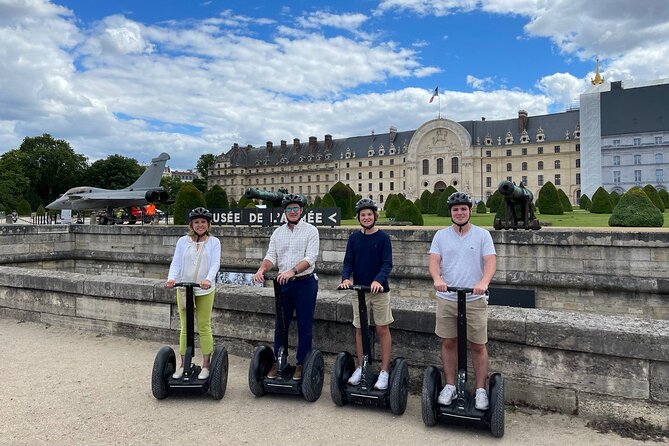
The meeting point is at 101 Avenue de la Bourdonnais, in the 7th arrondissement, and the route includes Les Invalides near the start. The Hôtel des Invalides was commissioned by Louis XIV in 1670 to house and care for wounded soldiers. Its broad complex remains one of Paris’s most recognizable military monuments.
You stop for photographs and a short explanation. The Musée de l’Armée and Napoleon’s tomb are part of the site, but admission is not included. That distinction matters: you are seeing the building from the outside, not touring the museum galleries.
This makes Les Invalides a useful opening stop. It gives the guide a chance to explain how royal power, the army, and Paris’s grand building projects fit together. If military collections are important to you, mark this site for a separate visit.
Pont Alexandre III gives you a classic Paris view
Pont Alexandre III is one of the city’s most decorative bridges, and it provides a strong outdoor photo stop. From here, the Eiffel Tower is visible, giving you a chance to frame two familiar Paris symbols in one view.
The guide also explains the setting rather than simply pointing at the tower. This is one of the moments when a private tour can feel more personal. You can ask where to return for a different view, how the bridge connects to the nearby monuments, or what deserves more time later.
The stop is short, so do not expect a long lesson about the bridge or a relaxed photography session. You get a quick look, an explanation, and time for pictures before moving on.
Grand Palais and Petit Palais show off 1900 Paris
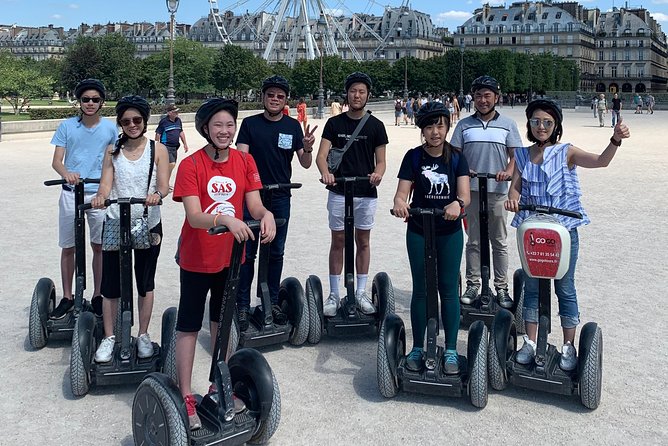
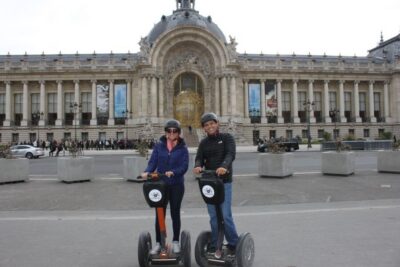
The Grand Palais and Petit Palais sit near one another and were both built for the 1900 Universal Exhibition. They make an efficient pair of stops, though the ten-minute format means you will see them from outside.
The Grand Palais was dedicated by the French Republic to the glory of French art. Its great glass and steel structure has made it one of Paris’s most recognizable exhibition buildings. The Petit Palais became a museum in 1902 and now gives the avenue a smaller, more intimate architectural counterpoint.
I like this section because it adds more than the standard Eiffel Tower and Louvre checklist. You see how Paris used world fairs to display art, engineering, and national pride. If you want to enter either museum, plan a separate visit because admission is not part of the Segway experience.
More private rides in Paris
- Paris: Private Sightseeing Segway Tour
★ 5.0 · 148 reviews - Paris: 1.5-Hour Private Segway Tour
★ 5.0 · 47 reviews - Segway private tour of 1.5 hour
★ 5.0 · 29 reviews - Segway private tour Lights of Paris
★ 4.7 · 13 reviews
Place de la Concorde connects royal, revolutionary, and modern Paris
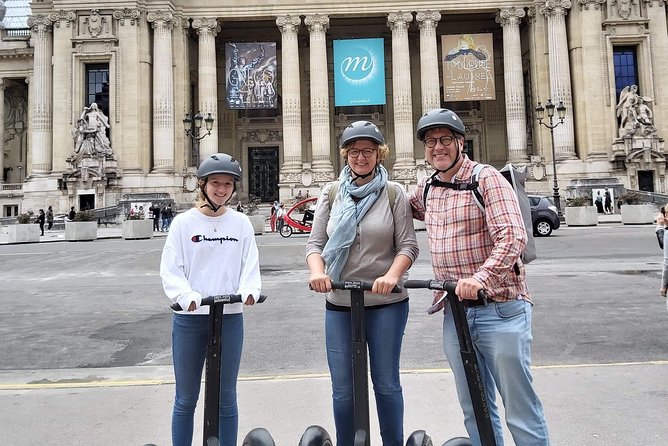
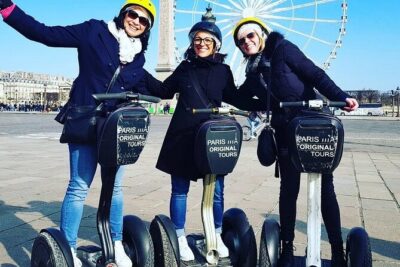
Place de la Concorde sits between the Champs-Élysées and the Tuileries Gardens. It is the largest square in Paris and one of the city’s most politically charged public spaces.
The guide stops for photos and explains the square’s past. Its broad open design makes it easy to appreciate from a Segway, since you can take in the scale without crossing the entire area on foot.
This is also a useful transition point in the route. From here, you can look toward the Tuileries and Louvre in one direction and the Champs-Élysées in the other. The stop is brief, so the value comes from the overview. If you want detailed information about every event connected with the square, you will need more time elsewhere.
The Louvre is a grand exterior stop, not a museum visit
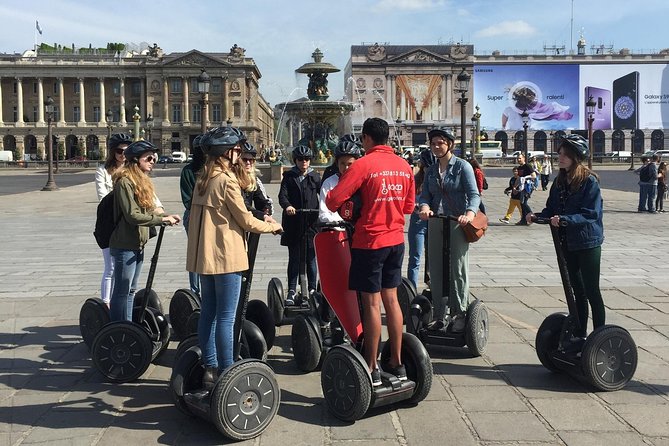
The Louvre began as a fortress in 1190 and was later rebuilt as a royal palace. Its long transformation helps explain why the complex feels so much larger than a single museum entrance.
You stop for photographs and an explanation outside. The Louvre admission fee is not included, and three hours would never allow a meaningful museum visit along with all the other stops anyway.
That limitation is worth treating as a benefit rather than a flaw if you use the tour correctly. You get an introduction to the building and its place in Paris, then you can return with a timed museum ticket and several hours to spare. If the Mona Lisa, Egyptian antiquities, or French paintings are your main reason for coming, do not count this tour as your Louvre day.
Musée d’Orsay links art to the railway age
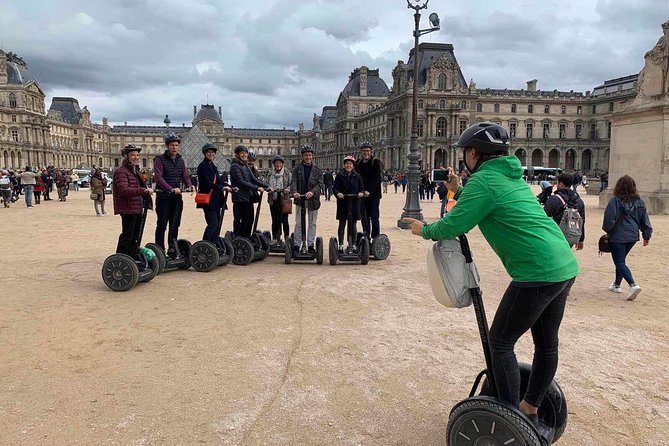
The Musée d’Orsay began life as a train station built for the 1900 World’s Fair. Architect Victor Laloux designed the Gare d’Orsay with modern features for its time, and the building later became one of Paris’s major art museums.
The exterior stop helps you see the museum as part of the city’s transport and exhibition story, not only as a place filled with Impressionist paintings. Again, admission is not included. You receive an outdoor introduction and can arrange a separate museum visit if you want to see the collections.
This is another reason the route works well as an orientation. Several stops are not just famous addresses. They show how Paris changed from royal capital to modern cultural center.
Champs-Élysées and Arc de Triomphe bring scale and ceremony
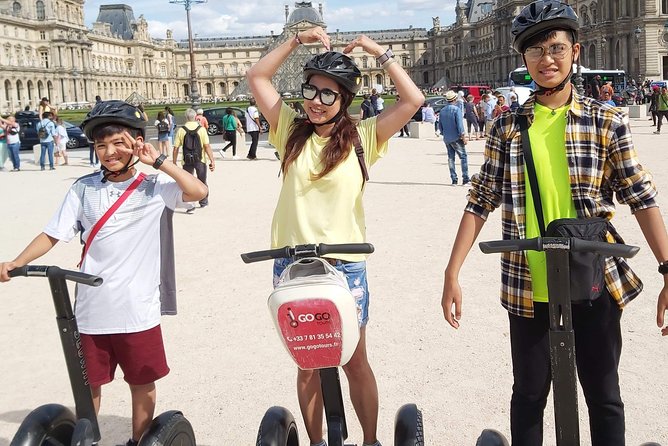
The Champs-Élysées was commissioned under Louis XIV, while Napoleon ordered the Arc de Triomphe after French military victories across Europe. The avenue and arch still form one of Paris’s grandest approaches.
You pass along the Champs-Élysées for pictures, then stop at the Arc de Triomphe for more photographs and history. The arch was intended to preserve the memory of French army victories. Construction began in 1806, and the monument was completed 30 years later.
A Segway is useful here because the avenue is long and the arch is better understood as part of a broad urban axis. You can see how the street leads toward the monument rather than treating the arch as an isolated object.
The Arc de Triomphe is an exterior stop. The tour does not include entry to the roof or the monument’s interior. If you want the famous elevated view over the twelve radiating avenues, plan a separate visit.
The Champs-Élysées can feel more commercial than historic, with shops and heavy traffic. That is part of its present identity. The guide’s context helps connect the modern avenue with its royal and military beginnings.
The Eiffel Tower closes the loop near the starting point
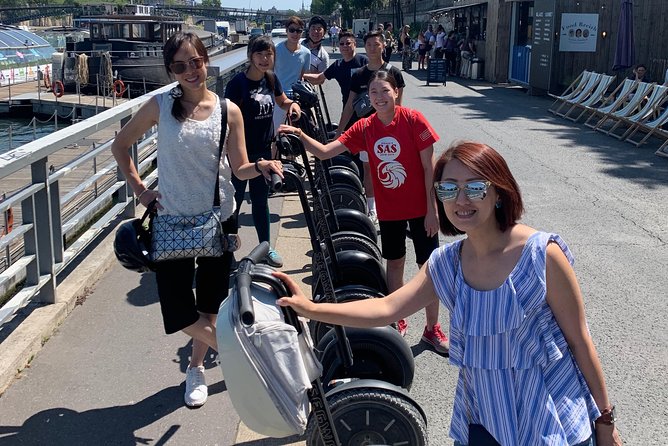
The final stop is focused on the Eiffel Tower and the Invalides area. The tower became a national symbol, but when Gustave Eiffel completed it in 1889, it was intended to be temporary and was not immediately loved by everyone in Paris.
That small piece of context gives the familiar tower a fresh angle. You are not only taking the standard photograph. You are hearing how a temporary exhibition structure became the image most associated with France.
The Eiffel Tower stop is listed as free, but this does not mean tower access is part of the activity. You see it from outside and hear its story. Tickets for going up are not included.
Ending back at the original meeting point makes the tour easy to combine with another Paris plan. You do not need to arrange a separate pickup or figure out where the guide will leave you.
The private format is the real advantage
The strongest reason to choose this activity is the private setup. Only your group participates, so the guide’s attention is not divided among strangers. That matters when your group has mixed interests or when you want to skip a sight you have already visited.
The guide can ask what you want to see, check whether you want another photo stop, and offer suggestions for the rest of your stay. Boris has been praised for checking in about interests and talking about Parisian life, while Eli has provided customized sightseeing advice. Sebastian has guided groups alongside Boris, and Ziggy has adjusted routes around places already covered.
Those names do not guarantee who will lead your departure, but they show the personal style you should hope for: a guide who does more than recite dates. Ask questions. Tell the guide what you have already seen. Mention if you care more about architecture, military history, shopping, food, or photography.
Private does not mean slow or luxurious. You are still covering ten locations in about three hours. The advantage is control, not a private car or long museum access.
What the $138.78 price buys you
At $138.78 per person, the tour costs about $46 per person for each hour. For two people, the listed price comes to roughly $277.56 before any separate costs you may have. That is not a budget sightseeing option.
The price includes the Segway, helmet, private guide, and weather supplies such as raincoats, gloves, and warm clothing when conditions are bad. It does not include museum admissions. You are paying mainly for the private guide and the ability to cover a large central route efficiently.
I think the value is strongest for:
- A first visit when you want a fast orientation
- Couples or families who prefer a private experience
- Groups with limited time in Paris
- People who like outdoor sightseeing and photo stops
- Anyone who wants local suggestions during the ride
The value is weaker if you plan to spend your day inside museums, dislike riding a Segway, or want a slow walking tour focused on one neighborhood. In those cases, a less expensive walking option may suit you better.
One family group of ten used the private format with adults and young adults, so the experience can work for a larger family party. Still, ask yourself if everyone in your group wants the same kind of active sightseeing. A private guide can adapt the route, but cannot make a museum visit part of a three-hour outdoor ride.
Weather, safety, and practical limits
The activity is offered in English, with morning and afternoon departure choices. Confirmation is provided when you book, and the meeting point is near public transportation.
Most people can participate, but anyone who is drunk or under the influence of drugs is not allowed to join. The inclusion of helmets is reassuring, and extra warm clothing and rain gear can be provided in poor weather.
The tour has free cancellation if you cancel at least 24 hours before the start time. Cancellations or changes made within 24 hours are not refunded or accepted. Pay attention to the local Paris time when making changes.
One cancellation problem did occur close to a departure, followed by an offer of alternate arrangements and a full refund. The practical lesson is to avoid booking at the last minute if your schedule is uncertain, and to read any messages from the operator promptly.
Who should book this Paris Segway tour?
I would choose this for a first or second day in Paris, especially if you want to see the main monuments before deciding where to spend more time. It also suits a family or small private group that wants shared sightseeing without the rigid pace of a large tour.
You should book it if the idea of moving outdoors between major landmarks sounds fun and if you value a guide’s personal suggestions. The ride can make a big city feel more manageable, especially when you have only a few days.
I would skip it if your priority is entering the Louvre, Musée d’Orsay, Les Invalides, or the Arc de Triomphe. None of those admissions is included. I would also think twice if $138.78 per person feels high for exterior views, even though the private format and equipment add real value.
FAQ
How long does the private Paris Segway tour last?
The activity lasts approximately three hours.
Where does the tour begin?
It begins at 101 Avenue de la Bourdonnais, 75007 Paris, France.
Where does the tour finish?
The activity ends back at the original meeting point.
Is the tour private?
Yes. Only your group participates in the activity.
Is the tour offered in English?
Yes. The tour is offered in English.
Are museum admissions included?
No. Admission tickets are not included for Les Invalides, the Grand Palais, the Petit Palais, the Louvre, or Musée d’Orsay. The stops are primarily for exterior views, photographs, and explanations.
What is included in the price?
The price includes use of a Segway, a helmet, a private guide, and raincoats, gloves, or warm clothing when weather conditions are bad.
Should you book it?
Book this tour if you want a lively three-hour introduction to central Paris, prefer private guiding, and are happy to see the city from the outside. The route covers an impressive number of major sights, and the guide’s personal tips can help shape the rest of your stay.
Skip it if you want museum interiors, a slow neighborhood walk, or the lowest possible price. For the right group, the Segway is an efficient and enjoyable way to connect Paris’s grand monuments, with enough flexibility to feel personal rather than programmed.
Newest segway tours in Paris
- Versailles Palace: Guided Segway Tour in the Park★ 5.0 · 7 reviews
- Segway tour Capital sites★ 5.0 · 11 reviews
- Paris Night Segway tour★ 5.0 · 9 reviews
- Paris Sunrise tour by Segway★ 5.0 · 4 reviews
- Versailles Palace Park by Segway★ 5.0 · 21 reviews
- Paris – Segway Tour 120 min★ 5.0 · 63 reviews
- Segway tour Monumental★ 5.0 · 6 reviews
- Segway tour Best of Paris★ 5.0 · 12 reviews
Paris Segway Tours, compared.
Paris Segway Express Tour (12 monuments in 1 hour and 30 minutes)
Read our review →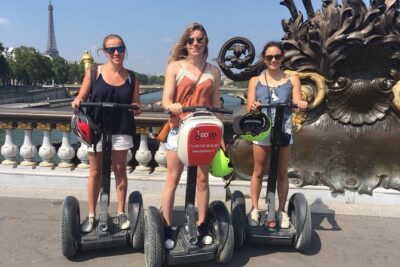
Paris City Sightseeing Half Day Guided Segway Tour with a Local Guide
Read our review →
Browse the lists this tour appears in