
Review · BARCELONA SEGWAY TOURS
Barcelona Guided Tour on Segway
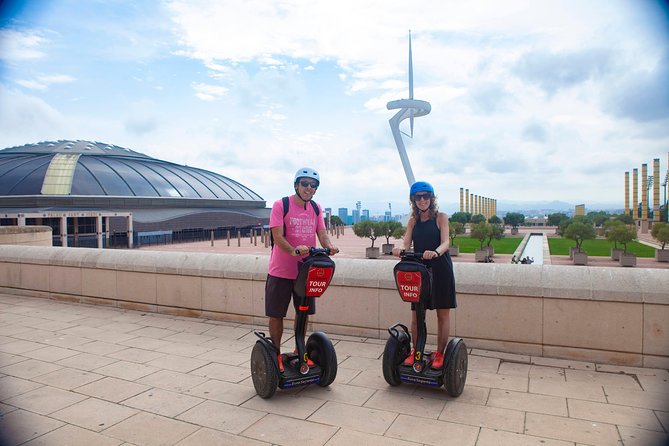
Barcelona is spread out, and this Segway tour covers serious ground without asking you to spend the day marching between sights. You begin beside the ancient Roman Wall in the Gothic Quarter, then roll past the Old Port, Ciutadella Park, the Arc de Triomf, Olympic landmarks, beaches, and Parc del Fòrum.
I like the careful practice session, especially for first-time riders, and I like the way the tour mixes famous sights with less obvious corners. Guides including Alex, Philip, Pablo, and Ivan bring history and local context to the ride. The catch is simple: standing for two or three hours takes some fitness, and busy streets, weather, and your comfort on the machine can affect the pace.
Key points to know before booking
- A fast city overview: Cover the Gothic Quarter, waterfront, parks, Olympic Village, and northeastern beaches in one outing.
- Beginner-friendly training: You practice under supervision before leaving the office, with helmets provided and extra practice if needed.
- Private tours go farther: Group tours follow the main route, while private tours can add beaches, parks, El Born, Santa Maria del Mar, and other stops.
- Several highly praised guides: Alex, Philip, Pablo, Ivan, and Val are noted for clear instruction, humor, patience, and local history.
- A practical choice for short visits: The three-hour option can help you get your bearings before exploring Barcelona on foot.
- Know the physical limits: Riders must weigh between 35 and 117 kilograms, and the legal minimum age to ride a Segway in Barcelona is 16.
Why a Segway makes sense in spread-out Barcelona
Barcelona rewards walking, but not every sight sits close to the next one. The Gothic Quarter, Port Vell, Ciutadella Park, the Olympic waterfront, and Parc del Fòrum form a long eastward route. On foot, covering all of it takes much of a day. A Segway gives you a quicker connection between districts while still leaving time to stop, look around, and hear the story behind each place.
The route also uses streets and paths that suit this kind of vehicle. You move through the old center, along the waterfront, through parks, and beside broad public spaces. That makes the ride more varied than a simple monument-to-monument tour.
The main value is not admission to a particular attraction. You do not enter museums or major buildings. Instead, you get a guided outdoor survey of Barcelona, with the chance to return later to the places that deserve a longer visit.
More guided rides in Barcelona
- Barcelona: City Highlights Guided Segway Tour
★ 4.9 · 624 reviews - Barcelona: 2-Hour City Sights Guided Segway Tour
★ 4.9 · 610 reviews - Barcelona: Guided Segway Tour
★ 4.8 · 412 reviews
Starting beside the Roman Wall in the Gothic Quarter
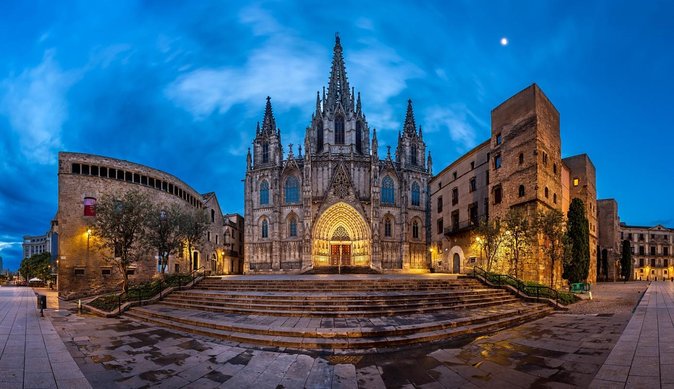
Meet at Carrer del Correu Vell, near the ancient Roman Wall in Ciutat Vella. This is a useful starting point because you are already in one of Barcelona’s oldest areas, surrounded by narrow lanes, old stonework, wrought-iron details, and grand buildings.
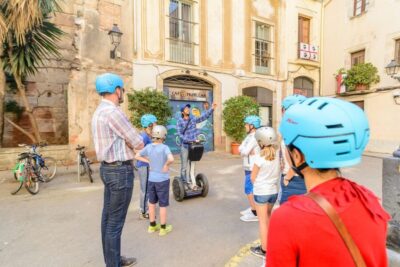
Before the ride begins, the guide gives you a supervised training session of about 10 minutes. You learn how to move, stop, turn, and balance. The Segway is self-balancing, so the controls are easier to understand than they first appear, but you should not feel rushed. The staff allows practice runs until the group is ready.
Helmets are mandatory, and all sizes are provided. Bottled water is included, a small but welcome detail on a warm Barcelona afternoon. Bring comfortable clothes and shoes. In rain, raincoats are provided, though bringing your own is sensible.
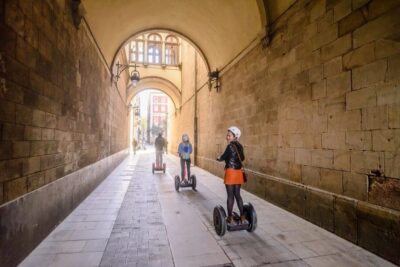
The first stretch through the Gothic Quarter gives you a feel for the machine in a historic setting. Narrow streets require attention, and your guide will help the group move safely. This part is less about speed and more about learning how the Segway responds.
From the Old Port to Columbus Monument
The ride then heads toward the Old Port and the Mirador de Colom, the tall Columbus Monument at the entrance to Port Vell. The stop is brief, around 10 minutes, but it gives you a clear sense of how Barcelona opens from its old center toward the sea.
Here, your guide explains the changes that reshaped the waterfront. The port area is one of the clearest examples of Barcelona’s shift from working harbor to public waterfront, with promenades, boats, restaurants, and open views.
The Segway is especially useful here because the broad spaces let you move with less effort. You can take photographs, but do not expect a long guided visit inside anything. This is an outdoor orientation tour, not a museum program.
Ciutadella Park and the Arc de Triomf
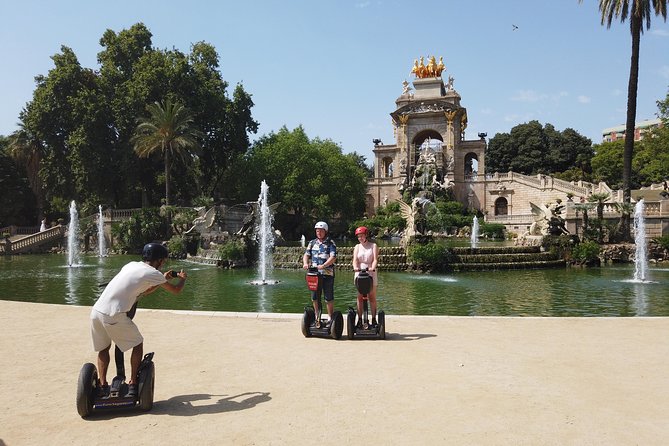
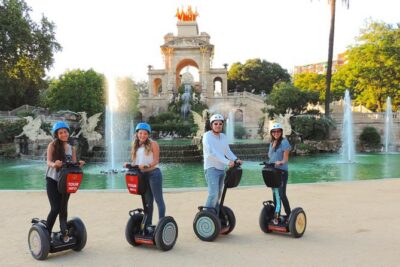
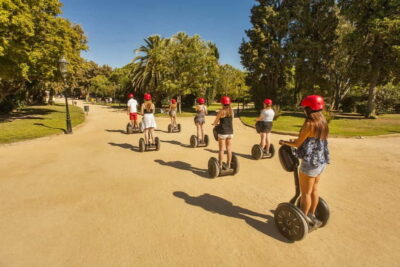
Parc de la Ciutadella is one of the route’s best pauses. The central park includes fountains, monuments, gardens, and former palace buildings. A stop of about 20 minutes, followed by another look at the monumental waterfall fountain, gives you time to get off the Segway and stretch.
The park has a different mood from the Gothic Quarter. Instead of tight streets and stone walls, you get open paths and decorative architecture. The grand fountain is a particularly good photo stop, with sculptural details that reward a closer look.
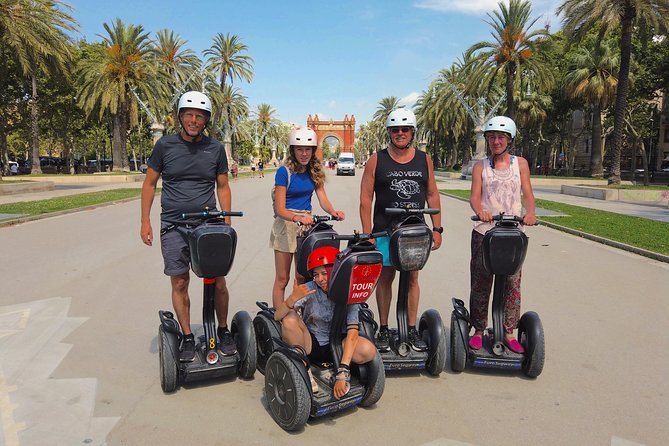
From there, you continue to the Arc de Triomf. Built for the 1888 Barcelona Universal Exposition, the red-brick arch is now a popular meeting point and a common stage for street performers. The avenue leading toward it gives you room to ride and makes the contrast between the old city and planned public spaces easy to see.
If you book a private tour, the guide can add more of Ciutadella Park. Possible stops include the lake, the military church, the umbracle, fountains, the Parliament of Catalonia, and the equestrian statue of General Joan Prim. These are short viewing stops, not extended visits.
More Segway Tours in Barcelona
- Barcelona Segway Tour
★ 5.0 · 680 reviews - Barcelona Segway Tour
★ 4.7 · 630 reviews - Barcelona Guided Tour by Segway
★ 5.0 · 374 reviews - Barcelona: City and Seafront Guided Segway Tour
★ 4.9 · 317 reviews
Port Vell, Olympic Port, and the city’s waterfront face
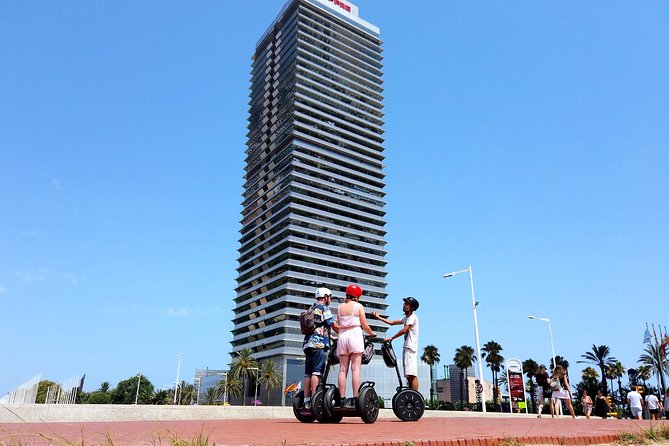
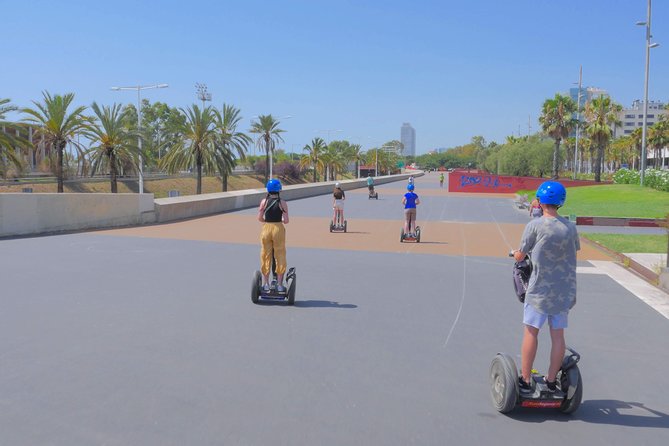
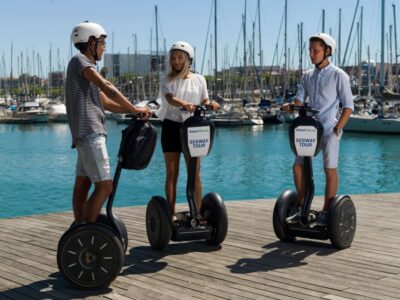
At Port Vell, you glide past yachts and waterfront promenades. The stop itself is short, but the ride matters because it links the historic harbor with the newer coastal districts.
Next comes Port Olímpic, created for the 1992 Olympic Games. The marina and broad waterfront paths offer open views back toward Barcelona. This is also where the city’s Olympic transformation becomes easier to understand. The old port and the Olympic waterfront are not the same kind of place, and seeing both in one ride helps you read the city’s recent development.
The Cara de Barcelona sculpture, often called the Barcelona Head, is another Olympic-era landmark. You stop only briefly, but the bright, oversized work makes a memorable roadside sight.
The route also passes Estació de França, one of Barcelona’s grand railway stations. Its architecture reflects an earlier age of rail travel, with a more formal feel than the open waterfront. Nearby, the David and Goliath sculpture recalls the city’s 1992 Olympic preparations and adds a piece of modern public art to the route.
Historic defenses and the Olympic Village
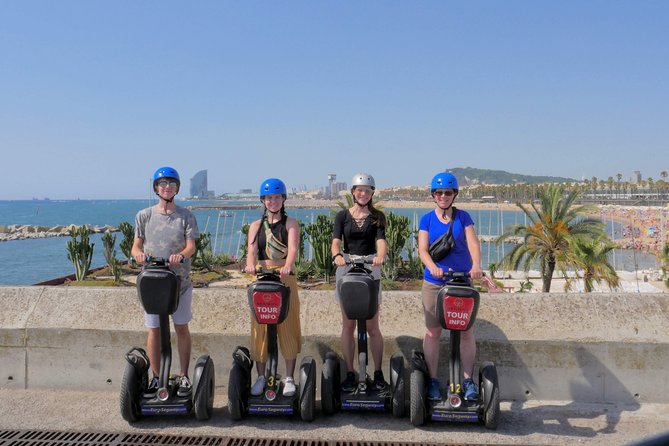
The Baluard de Migdia and Muralla de Mar connect the waterfront ride with Barcelona’s military past. These remnants of the old defenses are easy to miss if you stay only on the main tourist streets. Your guide can explain how the city was protected and how its relationship with the sea changed over time.
You also pass Plaça dels Campions, where the names of the gold-medal winners from the 1992 Olympic Games are recorded. It is a modest stop, but it gives the Olympic story a human scale. The broader redevelopment is one thing. The names of individual athletes make it more personal.
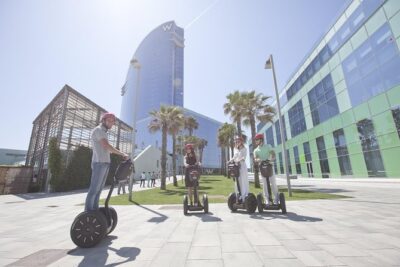
The route can include the Olympic Village and nearby beaches. On a standard group tour, the ride usually focuses on the main landmarks. A private tour can add Somorrostro, Nova Icaria, Bogatell, Mar Bella, Nova Mar Bella, and Llevant beaches.
Mar Bella and Parc del Fòrum
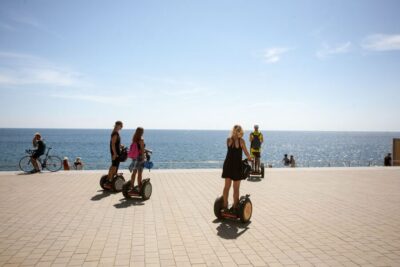
Platja de la Mar Bella provides a coastal pause with sand, Mediterranean water, beach bars, and restaurants. The beach section shows a more relaxed side of Barcelona, away from monuments and old streets. Keep in mind that the tour is not a beach day. You are viewing the shore and riding along it, not settling in for swimming or sunbathing.
The route continues toward Parc del Fòrum, a large modern waterfront area known for striking architecture and open spaces. The Forum Building and views toward the Mediterranean make this one of the more contemporary parts of the outing.
You may also pass the Museu de Ciències Naturals de Barcelona. The museum itself is not included, but even the exterior helps show how the northeastern waterfront combines public design, science, and urban redevelopment.
This final section is best for people who want more than the postcard center. It takes you beyond the Gothic Quarter and Gaudí routes into districts many short visits never reach.
Group or private tour, and how much time to choose
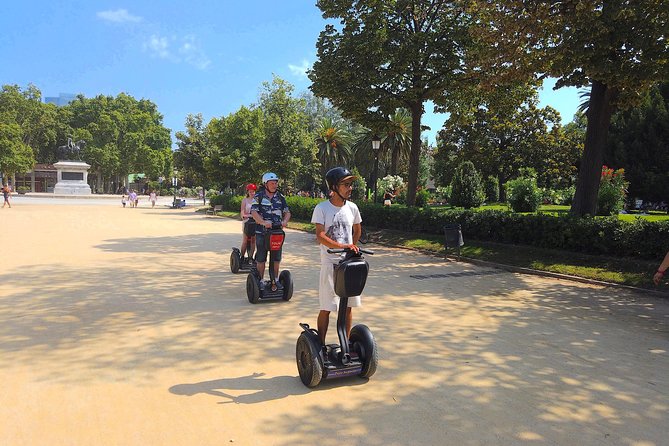
The tour is offered in group and private formats, with morning and afternoon departures. The maximum group size is 18 people, though some outings may be much smaller. One booking described a group of 11 with riders aged 16 to 53, while another private outing had only three people. Group size can affect how quickly you move and how much individual help you receive.
Choose the shorter option if you mainly want a taste of the experience and a quick look at central Barcelona. Choose two hours if you want a solid mix of the Gothic Quarter, port, parks, and waterfront.
The three-hour tour is the better choice if your schedule allows it. It gives you more time on the Segway and reaches farther along the coast. One of the strongest practical benefits is orientation: after three hours, you will have a working mental map of several districts and can decide where to return on foot.
A private tour costs more than a group outing, but it can be worthwhile for a couple, family, or small group with specific interests. The guide can tailor the route and add sights such as El Born, Santa Maria del Mar, the Museum of the History of Catalonia, the old port breakwater, and additional parks.
What the guides add to the ride
The machine gets you around, but the guide determines how useful the outing feels. Alex is praised for combining humor with clear information and for giving first-time riders confidence. Philip is repeatedly described as patient, friendly, and strong on Barcelona’s history. Pablo is a good fit if you like stories about how the city expanded and changed.
Ivan is noted for professional instruction and a friendly manner, while Val is remembered for bringing energy and humor to the experience. Guide availability depends on the day, so you may not be able to request a particular person.
The best guides do more than name monuments. They explain why a park, railway station, defensive wall, Olympic sculpture, or beach matters. They also adjust the pace. Experienced Segway riders may move quickly from one sight to the next, while beginners get extra help with stops, starts, and getting on and off.
Practical limits and small drawbacks
You must present valid identification or a passport at the start, though a copy is accepted. The minimum age to join is 12, but Barcelona law sets the minimum age for riding a Segway at 16. For younger participants, the operator provides child-suitable e-bikes at the same price.
Riders must weigh at least 35 kilograms and no more than 117 kilograms. You need enough balance and stamina to stand for the ride, which can last two or three hours. One clear point of caution is physical comfort. The activity is easy to learn, but it is not entirely effortless.
The tour operates in all weather conditions, with raincoats available. Severe weather can lead to a new date or a full refund, but ordinary poor weather may mean riding in damp or cool conditions. Routes can also change because of street closures, crowds, construction, or other problems outside the operator’s control.
The low advertised price of $3.62 per person makes the experience look like an exceptional bargain, but confirm the final price, tour length, and private or group option when booking. The real value comes from the time saved and the number of districts covered, not from included entry tickets. No museums or buildings are part of the price.
Who should book this Barcelona Segway tour
I would choose this for a first visit, a short stay, families with older children, and anyone who wants a fast introduction before exploring alone. It also suits people who have already seen the central sights and want to reach the Olympic waterfront and northeastern beaches without arranging several separate outings.
It is less suitable if you dislike motorized sightseeing, want long visits inside monuments, or tire easily while standing. It is also not the right choice for someone hoping to spend hours wandering slowly through the Gothic Quarter. The route gives you a look at many places, but the stops are often brief.
Cancellation is free up to 24 hours before the start time. Changes or cancellations inside that window are not refunded, except when severe weather causes the operator to cancel.
Should you book it?
Book it if you want range, context, and a little adventure in one outing. The strongest version is a private two or three-hour ride, especially if you want extra beaches, El Born, Ciutadella Park, or the old harbor.
A group tour is still a good value if you are comfortable sharing the pace. Take the training seriously, wear comfortable shoes, and expect to do some standing. If you can handle that, this is one of the quickest ways to understand how Barcelona’s ancient center, public parks, Olympic waterfront, and modern coast fit together.
FAQ
Where does the Barcelona Segway tour start?
The tour starts at Carrer del Correu Vell, 6, in Ciutat Vella, near the ancient Roman Wall in the Gothic Quarter.
Where does the tour finish?
The activity ends back at the original meeting point.
How long does the tour last?
Available options range from about five minutes to three hours, depending on the selected experience. The main sightseeing options described include two-hour and three-hour tours, along with shorter training or photoshoot sessions.
Is Segway training included?
Yes. You receive about 10 minutes of supervised training before the sightseeing begins, and you can practice until you feel ready.
Are helmets provided?
Yes. Helmets are mandatory, and all sizes are provided.
What age do you need to be to ride?
The minimum age to join a tour is 12, but Barcelona law requires riders to be at least 16 to use a Segway. Younger participants receive suitable e-bikes, with the price unchanged.
Is there a weight requirement?
Yes. Segway riders must weigh at least 35 kilograms and no more than 117 kilograms.
Does the tour operate in bad weather?
The tour operates in all weather conditions, and raincoats are provided if needed. In severe weather, you may be offered another date or a full refund.
Can the route include extra beaches and parks?
Yes, on private, tailor-made tours. Possible additions include Somorrostro, Nova Icaria, Bogatell, Mar Bella, Nova Mar Bella, Llevant, Parc Diagonal Mar, Parc del Centre del Poblenou, Parc de les Glòries, and extra sights in Ciutadella Park.
Newest segway tours in Barcelona
- Welcome to Barcelona Segway and eScooter Tour★ 5.0 · 2 reviews
- Seaside Segway Tour in Barcelona★ 5.0 · 33 reviews
- Segway Flexible Private Tour in Barcelona★ 5.0 · 16 reviews
- Sagrada Familia Segway Tour★ 5.0 · 12 reviews
- Barcelona: Montjuïc Segway Tour★ 5.0 · 64 reviews
- Segway Tour to Sagrada Familia views★ 5.0 · 5 reviews
- Highlights of Barcelona Segway Tour★ 5.0 · 41 reviews
- 2hr Montjuïc Castle Segway Tour★ 5.0 · 5 reviews
Barcelona Segway Tours, compared.
Browse the lists this tour appears in