
Review · MUNICH SEGWAY TOURS
Munich Third Reich and WWII Segway Tour
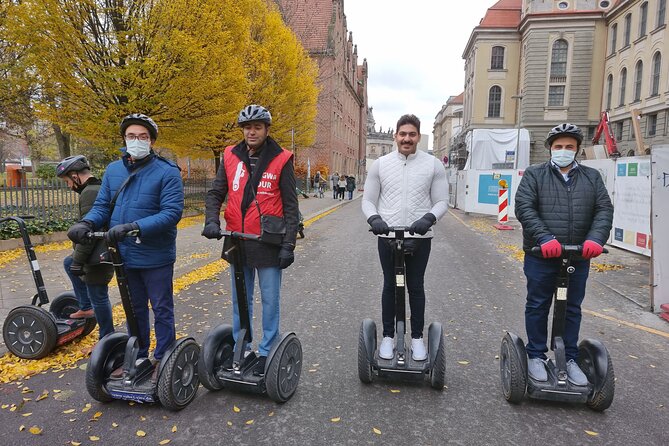
Munich’s Nazi-era story is spread across the city, and this three-hour Segway ride lets you connect the places faster than you could on foot. You move from Königsplatz and the Führerbau to the Hofbräuhaus, White Rose locations, and Odeonsplatz, with Bavarian history filling in the gaps between the buildings. Guides including Karl, Josef, Claudia, and Rawen have been praised for clear explanations and patient coaching.
I like two things here: the range of ground covered and the way the ride suits first-time Segway users as well as confident riders. You also get time for questions and photographs, and families with teenagers have found it an easy way to keep everyone engaged. The main caution is that this is still an outdoor ride. Cold weather can feel much colder on a Segway, and one rider reported a mechanical failure and fall, so pay attention during the safety briefing.
Key points at a glance
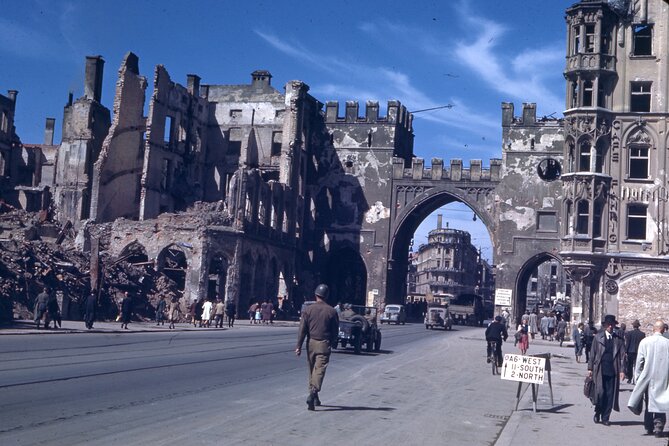
- Three hours across central Munich: See a long list of Nazi-era and Bavarian landmarks without spending the whole day walking.
- A serious subject on a lively vehicle: The Segway makes the route fun, but the focus remains on Munich’s political past and wartime history.
- Strong guide feedback: Karl, Josef, Claudia, and Rawen are specifically praised for patience, clear information, and help with nervous riders.
- Useful for families and couples: Teenagers aged 14 and 17 enjoyed the experience, and the format can keep a mixed-age group moving.
- Weather matters: Cold air feels sharper while riding, so dress warmly, especially outside the warmer months.
- Good cancellation terms: You can cancel for a full refund up to 24 hours before the 10:00 am start, subject to the tour’s minimum group requirement.
Seeing Munich’s Nazi past without spending all day on foot
This is not simply a city ride with a few historical comments added. Its route follows the story of Adolf Hitler’s rise in Munich, the Nazi movement’s use of the city, opposition to the regime, and Hitler’s plans for a rebuilt political capital.
That subject needs care. The tour visits places tied to Nazi power, but it also includes sites connected to resistance and the wider civic life of Munich. The result should give you a more complete picture than a route focused only on party buildings.
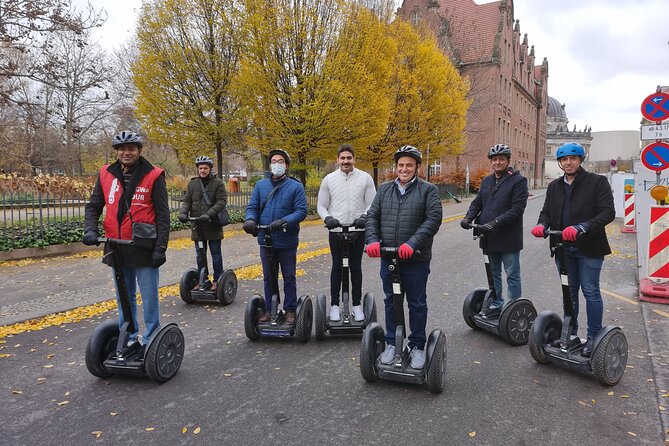
A Segway changes the pace. You can cover central districts quickly, then stop at important locations for explanations, questions, and pictures. I like this format for a first or second day in Munich, when you want a broad sense of the city before returning to a few places in greater depth.
The ride is offered in English and lasts about three hours. It starts at 10:00 am, then returns to Artur-Kutscher-Platz 2A in the Schwabing-Freimann area. The group can include up to 20 people. That is large enough to create some energy, but small enough for a guide to keep the route together under normal conditions.
More Segway Tours in Munich
- Munich: City Highlights Guided Segway Tour
★ 4.6 · 266 reviews - Munich 3-Hour Segway Tour: Nazi Munich & Royal Architecture
★ 4.9 · 194 reviews - Munich Segway Tour
★ 5.0 · 181 reviews
Learning the Segway before the history begins
If you have never used a Segway, the first few minutes matter more than the vehicle’s futuristic appearance suggests. The positive reports about this experience repeatedly point to patient instruction and time to get comfortable. Josef is praised for making the ride easy for a family, while Karl is singled out for helping nervous beginners and answering questions.
That makes this a reasonable option for a first Segway outing, though you should not mistake easy to learn for completely risk-free. You need to stay alert around other people, pavements, and city traffic. One rider reported that a Segway failed and caused a backward fall. The incident did not result in a serious injury, but it is a reminder to listen closely to the guide and report any problem with the equipment at once.
The operator lists the activity as suitable for most people, but the supplied information does not give detailed physical requirements. If you are unsure about balance, mobility, or comfort on a moving vehicle, ask the provider before booking.
Königsplatz and the architecture of power
Königsplatz is one of the most important stops on the route. Its formal open space and monumental buildings provide a clear setting for explaining how public places can be used for political theater.
Here, the guide can place Munich’s Nazi-era story into the city itself rather than treating it as a string of disconnected dates. The location helps you see how architecture, ceremony, and public gatherings were used to support a political movement.
You should expect to pause rather than race through. The Segway helps you reach the square, but the value comes from the explanation once you arrive. If you are mainly looking for fast sightseeing and little commentary, this stop may feel slower. If you want context, it is one of the route’s most useful moments.
Führerbau, Braunes Haus, and the machinery of the Nazi movement
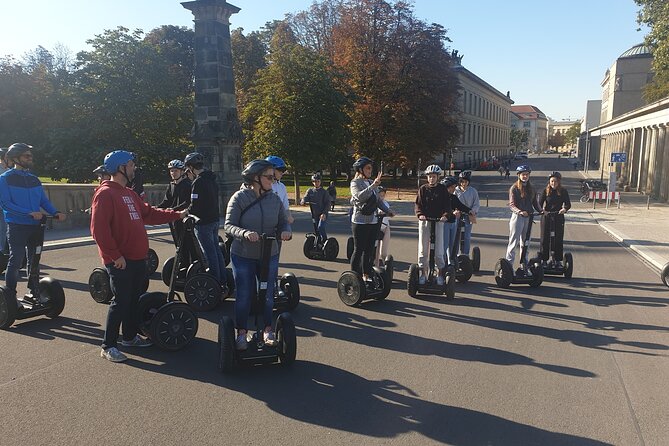
The route includes the Führerbau and the former Braunes Haus, two names tied closely to Nazi political power in Munich. The Führerbau was associated with Hitler’s administration and major political activity. The Braunes Haus served as the headquarters of the Nazi Party.
You do not need to know every building before you arrive. The guide’s job is to explain why these places mattered and how Munich became central to the movement. This is where the historical focus of the tour is strongest.
The route also asks you to think about the difference between a building’s present appearance and its past use. Some places are not presented as museums with large displays. Instead, the street, square, or structure becomes the starting point for a short explanation. That makes the guide especially important. Karl, Rawen, Claudia, and Josef are all named in the available feedback, with Karl receiving repeated praise for answering questions and taking photographs.
A different kind of ride in Munich:
- Munich: City Highlights Guided Segway Tour
★ 4.5 · 161 reviews - Munich’s Highlights 3-hour Segway Tour
★ 5.0 · 76 reviews - Munich Classic City Segway Tour (English or German Guide)
★ 5.0 · 65 reviews - Munich: Third Reich and World War II Segway Tour of the City
★ 4.1 · 44 reviews
The Beer Hall Putsch and Munich’s political turning point
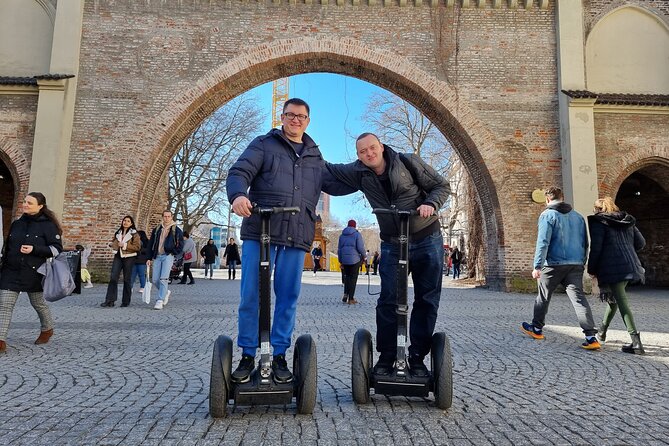
The experience includes the Beer Hall Putsch, the failed 1923 attempt by Hitler and his supporters to seize power in Bavaria. The event is essential to understanding why Munich matters in the story of Nazi Germany.
A brief stop cannot cover every political detail, but the route gives the subject a physical setting. You are not hearing about the putsch as an isolated textbook episode. You are moving through the city where the attempt took place and where the Nazi movement later built its public identity.
The itinerary includes the Hofbräuhaus and Hofbräukeller, both valuable names in this part of the story. The famous beer hall is also one of Munich’s best-known cultural sights, so the stop can help connect the city’s political history with its beer-hall traditions.
One limitation is that the route also passes through the shopping district. A rider expecting only World War II sites felt the tour included too much general downtown sightseeing. That criticism is fair. This is a Munich city tour with a strong Third Reich and World War II focus, not a tightly confined memorial route.
White Rose resistance and the human side of the story
The White Rose is included among the stops. This matters because it shifts the focus from Nazi leaders and party offices to people who opposed the regime.
The White Rose group is associated with student resistance in Munich. The supplied information does not provide the length or exact format of this stop, so you should expect the guide to introduce it as part of the wider route rather than plan on a long museum visit.
Still, its inclusion improves the historical balance. Munich’s past was not only the story of Nazi power. It also included people who risked their lives to resist it. If this part of the history interests you, note the site during the ride so you can return later for more detailed study.
Hitler’s Munich apartments and the city he wanted to remake
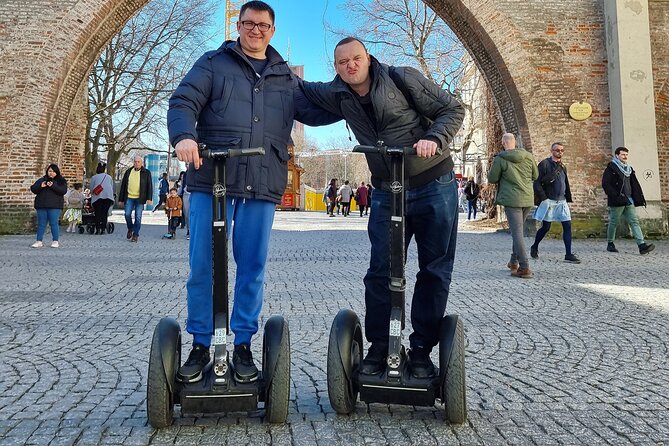
The route names Hitler’s apartment from 1920 to 1929 and another apartment associated with 1933. These stops help trace the movement from political beginnings to national power.
The itinerary also includes Maximilianeum and Maximilianestrasse, along with the plan to rebuild Munich as a grand political capital. The guide can use these locations to explain the gap between Hitler’s early years in the city and his later vision for transforming it.
This part of the route is valuable because it shows Munich as more than a backdrop. The city was important to Hitler’s career and to the Nazi movement’s self-image. At the same time, you should keep your expectations realistic. The tour does not promise entry into private apartments or extensive interior visits. Much of the experience takes place from the street, with the guide providing the historical link.
Residenz, Odeonsplatz, and the final stretch
The route includes the Residenz München and Odeonsplatz, two central Munich landmarks with importance beyond the Nazi-era story.
Odeonsplatz is particularly relevant to the Beer Hall Putsch and to the city’s public spaces. The Residenz adds a broader Bavarian and royal context, reminding you that Munich’s past reaches well beyond the twentieth century.
That wider frame is one of the tour’s strengths. You are not being asked to view Munich only through the years of dictatorship and war. Instead, the route places those events within a much older city, with its palaces, public squares, cultural institutions, and civic traditions.
The itinerary also names the Alte Synagoge, Haus der Kunst, the Angel of Peace, and the Maximilianeum. The exact time spent at each place is not specified, so the guide may give some locations a short explanation while using others for longer stops. If you want a detailed treatment of every landmark, three hours will not be enough. If you want a broad, connected introduction, the pace makes sense.
Why the Segway works better than a walking tour for some people
A walking tour gives you more time to absorb each street. A Segway tour gives you reach. That difference is the central value here.
The route covers sites in several parts of Munich, including locations near Königsplatz, the central old town, the Isar side of the city, and the Maximilianeum area. Covering this range on foot would require more time and energy. The Segway lets you see more in one morning, which is especially useful if you have only a short stay.
It also keeps families moving. Two teenagers, aged 14 and 17, reportedly enjoyed the experience, and several comments emphasize that the ride was more fun than walking. Couples may like the same balance of sightseeing and activity.
The trade-off is concentration. You need to watch where you are going while listening to the guide. At crowded points, the experience may feel less relaxed. One rider found downtown too crowded, and another reported a less organized day after a guide failed to arrive. Those appear to be exceptions within a mostly positive set of experiences, but they are worth keeping in mind.
Guide quality makes or breaks the morning
The strongest part of this experience is the human element. Karl is praised for being friendly, informative, patient with questions, and helpful with photographs. Josef is described as a very good guide for learning about Munich and its history. Rawen is noted for tailoring the ride to the group and helping a first-time rider feel safe. Claudia is praised as a good guide even on a day affected by staffing problems.
That range gives you a useful picture of what to value. A good guide does more than recite dates. You want someone who can explain why a location matters, adjust the pace for beginners, leave time for photographs, and connect Bavarian history with the Nazi-era story.
Guide assignments can change, so I would not book on the assumption that one named person will lead your tour. Still, the repeated emphasis on friendly instruction and clear information is a strong reason to consider this format.
Is $82.82 a fair price?
At $82.82 per person, this is not the cheapest way to see Munich. The value depends on how much you want to cover and how much help you need with the city’s complicated history.
You are paying for about three hours of transport by Segway, a guided route, equipment, instruction, and a focused history lesson across many central sites. There are no separate admission charges listed for the stops, which suggests the experience is primarily an outdoor sightseeing route rather than a ticketed museum tour.
I see the price as reasonable for a visitor who wants to cover a lot of ground quickly, especially early in a Munich stay. It is less compelling if you prefer long visits inside museums, already know the city well, or want a narrowly focused World War II route with no general sightseeing.
The mobile ticket is practical, and the tour is near public transportation. Confirmation arrives at booking. You should plan to reach Artur-Kutscher-Platz before the 10:00 am start, since the activity returns there at the end.
Clothing, weather, and practical comfort
Dress warmer than you think you need. A rider specifically warned that cold weather feels very cold while moving on a Segway. Even if the air feels mild at the start, the steady motion can make the ride uncomfortable.
The tour is outdoors and lasts three hours, so your comfort affects how much history you absorb. Wear clothing that allows easy movement and prepare for changing conditions. The available information does not specify helmets, rain arrangements, or a detailed equipment policy, so ask the provider if any of those points matter to you.
The group maximum is 20 people. That keeps the tour from becoming enormous, though a full group can still feel crowded at popular city sights. A private tour may sometimes be available, since one experience was described as a private route tailored to what the group had not yet seen, but the standard group size and private-tour terms are not specified.
Should you book this Munich Segway tour?
Book it if you want a lively, efficient introduction to Munich’s Nazi-era sites and broader Bavarian setting. It is particularly suited to couples, families with older children, first-time Segway riders, and visitors who want more range than a walking tour can provide.
I would skip it if you want a museum-heavy experience, dislike riding in busy city areas, or expect every minute to focus on World War II. The route includes shopping streets and major general sights, and the outdoor format makes cold weather a real factor.
For the best fit, choose this tour early in your Munich visit. Use it to map the city, hear the basic story, and note the places you want to revisit on foot. At $82.82, the ride earns its price when speed, guide support, and broad coverage matter more to you than long stops at individual sites.
FAQ
How long is the Munich Third Reich and WWII Segway Tour?
The tour lasts approximately three hours.
What time does the tour start?
The tour starts at 10:00 am.
Where does the tour begin?
It begins at Artur-Kutscher-Platz 2A, 80802 Munich, Germany.
Where does the tour end?
The activity ends back at the meeting point.
What language is the tour offered in?
The tour is offered in English.
How many people can join the tour?
The maximum group size is 20 travelers.
Which Munich landmarks are included?
The route includes the Alte Synagoge, Königsplatz, Führerbau, Braunes Haus, Schelling-Salon, White Rose locations, Haus der Kunst, the Angel of Peace, Hitler’s apartments, Hofbräukeller, Maximilianeum, Maximilianestrasse, Hofbräuhaus, Residenz München, and Odeonsplatz.
Is the tour suitable for first-time Segway riders?
The available information says most people can participate, and guides have helped nervous and first-time riders learn the Segway. You should still consider your own comfort with balance and moving equipment.
How much does the tour cost?
The listed price is $82.82 per person.
Can I cancel for a full refund?
Yes. You can cancel up to 24 hours before the experience start time for a full refund. Cancellations or changes made less than 24 hours before the start are not refunded or accepted. The tour may also be canceled if its minimum number of participants is not reached, in which case you will be offered another date or experience, or a full refund.
Newest segway tours in Munich
- Munich’s Highlights 3-hour Segway Tour★ 5.0 · 76 reviews
- Segway tour Munich Beer Stories (3h)★ 5.0 · 3 reviews
- Munich 2-Hour Segway Tour★ 5.0 · 15 reviews
- Beer Testing Segway Tour in Munich★ 3.5 · 2 reviews
- Segway Tour Munich Old Town 3 hours★ 4.5 · 10 reviews
- Munich Classic City Segway Tour (English or German Guide)★ 5.0 · 65 reviews
- 2-Hour Segway Discovery Munich Night Tour★ 5.0 · 2 reviews
- 2-Hour Segway Discovery Tour Munich★ 5.0 · 20 reviews
Munich Segway Tours, compared.
Munich 3-Hour Segway Tour: Nazi Munich & Royal Architecture
Read our review →
Munich Classic City Segway Tour (English or German Guide)
Read our review →
Third Reich and World War II Segway Tour of the City
Read our review →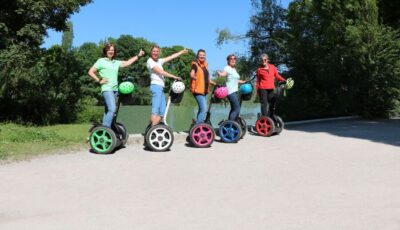
Browse the lists this tour appears in