
Review · USA SEGWAY TOURS
Washington DC: See the City Segway Tour
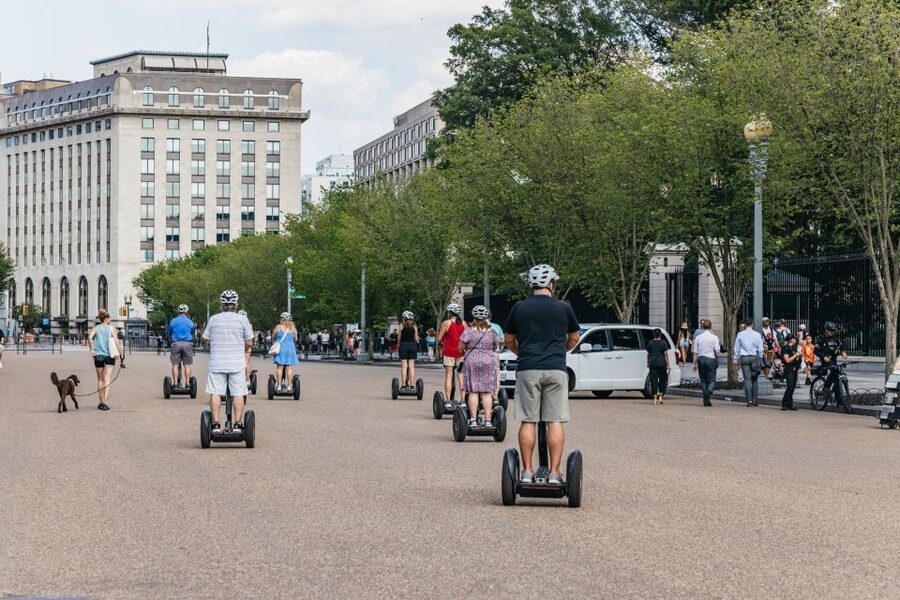
Washington’s National Mall is made for a Segway. The monuments are spread across a surprisingly large area, and this tour lets you cover ground without spending half the day marching between them. You get close views, regular photo stops, and a running history lesson through a personal radio headset.
I especially like the careful one-on-one training, which helps first-time riders settle in before heading into the city. I also like the clear headset system: guides such as Kyle, Brandon, Teddy, and Evan can keep talking while the group moves, rather than shouting at the back of the line.
The main drawback is physical. Two and a half hours on a Segway can leave your feet tingling, and some tours have finished closer to two hours. You also will not necessarily stop at every site listed, so this is a fast, broad introduction rather than a substitute for visiting the monuments on foot.
Key points before you book

- The training is taken seriously: Arrive 30 minutes early for a short video, equipment fitting, practice session, and individual instruction.
- The route covers major DC sights quickly: Expect the White House, National Mall monuments, memorials, government buildings, and possibly the Capitol area.
- Headsets make a real difference: You can hear the guide’s stories and jokes while riding in a single line.
- First-time riders usually get comfortable fast: The Segways are easier to handle than they look, but you still need to pay attention.
- The $70 price buys coverage, not entry tickets: You see many landmarks from outside and get historical context, but museum admissions are not part of the tour.
- It suits older children and adults: DC law sets the minimum age at 16, and the tour is not recommended during pregnancy.
Why a Segway works so well on the National Mall

The National Mall looks compact on a map. On foot, it is a different story. The White House, Washington Monument, Lincoln Memorial, Vietnam Veterans Memorial, Capitol, and Smithsonian museums are spread over a long east-west stretch, with wide avenues and open lawns between them.
A Segway takes the strain out of that distance. You can glide from one area to the next instead of using valuable sightseeing time on long walks. I would not call it effortless in every sense, since you must steer, balance, watch the pavement, and follow the guide, but it is far less tiring than covering the same ground on foot.
The biggest benefit is orientation. On a first DC visit, it is easy to lose your sense of where the monuments sit in relation to one another. This ride gives you a clear overview early in your stay. You can then return later to the places that deserve more time, such as the Lincoln Memorial, National Archives, or one of the Smithsonian museums.
You should think of this as a moving introduction to Washington, not a series of long monument visits. The group keeps moving, and the guide decides how many listed sights fit into the route and the conditions of the day.
More Segway City Tours in the USA
- Washington DC “See the City” Guided Sightseeing Segway Tour
★ 5.0 · 1,924 reviews - Guided Segway Tour of Downtown Nashville
★ 5.0 · 1,568 reviews - Greenville City Segway Tour
★ 5.0 · 304 reviews
Arriving near the White House
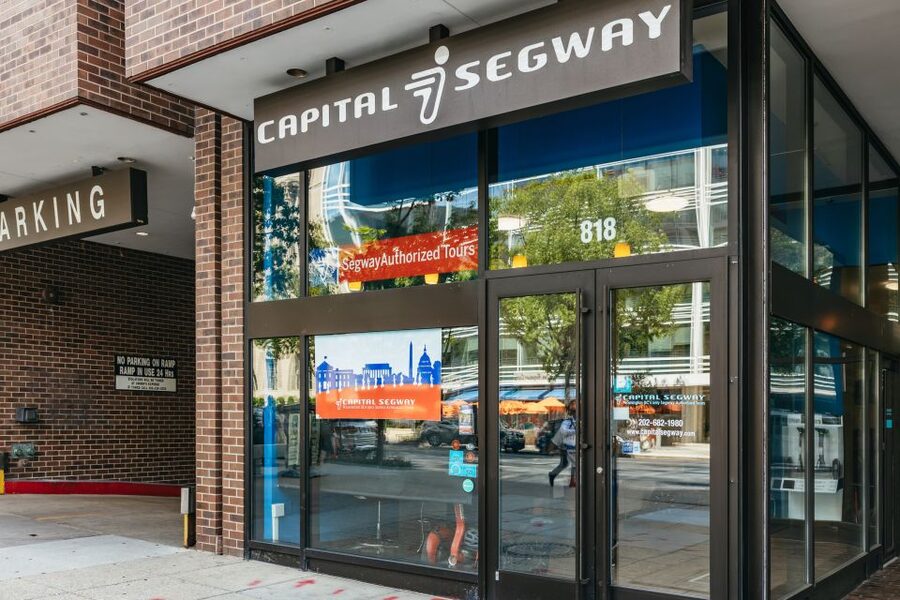
Capital Segway Tours meets inside its shop on Connecticut Avenue, about half a block north of the White House. Farragut West and Farragut North Metro stations make the meeting point convenient if you are staying outside central Washington.
Arrive 30 minutes before departure. This is not a suggestion to squeeze in a coffee first. The early arrival covers the safety briefing, a short instructional video and presentation, helmet fitting, and practical instruction.
The staff starts indoors, where you can learn the basic controls without traffic or sightseeing distractions. You receive your own Segway and helmet, then practice with staff members nearby. The training is particularly useful if you have never ridden one, and it also serves as a refresher if you have not used one for years.
The staff’s approach has earned strong praise, especially from nervous first-time riders and older adults. People in their 50s, 60s, and 70s have found the machines manageable after the practice session. That does not mean you can skip concentration, but it does mean you do not need previous Segway experience.
Before setting off, the group completes a soundcheck so each headset works. This small step matters. The guide can then speak while you ride, and you do not need to stop every few minutes to hear the next piece of information.
The White House and Lafayette Square
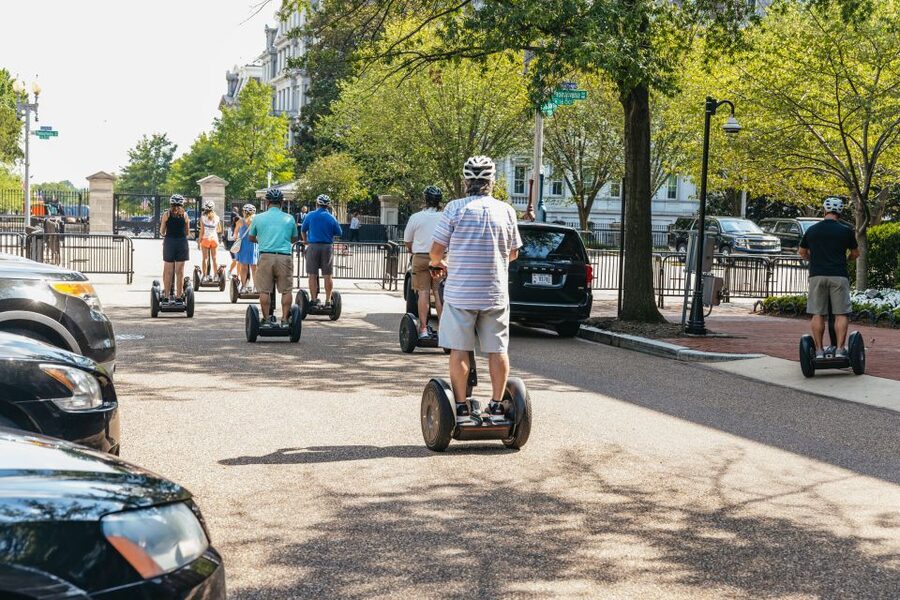
The White House is the first major stop, just across from the starting point. That makes the opening of the tour efficient: you are looking at one of Washington’s most famous buildings almost immediately, without a long transfer.
From there, the route can include Lafayette Square and the US Treasury. These sites help place the White House within the wider machinery of the federal government. You will hear stories as the group rides, rather than receiving only a quick photo opportunity.
The headset commentary is one of the tour’s strongest features here. The group may ride in a single line for safety and to avoid getting in the way of pedestrians, but the guide’s voice remains present. Guides such as Brandon, Kyle, and Teddy have been praised for mixing useful facts with humor, which keeps the history from becoming a dry list of dates.
Do not expect to enter the White House or Treasury during this activity. The value here is the outside view, the setting, and the explanation of what you are seeing.
Crossing the National Mall

Once you reach the Mall, the tour becomes a rolling lesson in Washington’s layout. The broad open spaces allow the group to move between major landmarks faster than a walking party, with stops for photos and short explanations along the way.
The possible route includes Constitution Gardens, the Reflecting Pool, the Washington Monument, and several memorials. The exact combination depends on timing, weather, and the pace of the group. The wording matters: the tour aims to see as many sites as possible, but you should not expect a fixed promise that every place on the long list will receive a stop.
The Washington Monument is one of the clearest orientation points in the city. From around this area, the guide can connect the Mall’s memorials, museums, and government buildings. The open setting also makes it easier to appreciate the scale of the city’s plan, something that can be hard to grasp when you are focused on walking.
The tour may pass the Smithsonian museums and the National Gallery of Art. That is useful for planning the rest of your visit. If you want to go inside, make a note of which buildings interest you and return later with enough time to explore properly.
A different kind of ride in the USA:
- 60-Minute Guided Segway History Tour of Savannah
★ 5.0 · 1,163 reviews - Fort Lauderdale Segway Tour
★ 5.0 · 1,017 reviews - 90 Minute Historic Uptown Neighborhood Segway Tour of Charlotte
★ 5.0 · 917 reviews - Pittsburgh Segway Tour
★ 4.5 · 769 reviews
Lincoln Memorial and the Reflecting Pool

The Lincoln Memorial is usually a key pause because it gives you one of the most recognizable views in Washington. The Reflecting Pool leads the eye back toward the Washington Monument, creating a classic line through the Mall.
The group has stopped at the Lincoln Memorial for around 15 minutes on some tours, giving riders time to park, stretch, look around, and take photographs. That break is welcome. A Segway reduces walking, but your feet remain planted on a small platform for much of the ride, and a short rest can make the second half more comfortable.
You should not assume that every stop will be long enough for a full visit. The guide’s job is to keep the group moving and cover a broad area. If the Lincoln Memorial is a priority, I would return later to climb the steps, see the interior, and take your time with the inscriptions.
This is also a good point to ask questions. The radio system lets the guide explain the site while everyone is gathered, then continue with smaller facts as the group moves away.
The war memorials along the route

The Vietnam Veterans Memorial, Korean War Memorial, DC War Memorial, and World War II Memorial may all feature in the route. Each has a different mood and design, so seeing them together helps you understand how Washington presents military memory.
The Vietnam Veterans Memorial is quieter and more personal than many of the Mall’s grand classical buildings. The Korean War Memorial uses sculpted figures to create a very different impression, while the World War II Memorial is broad and formal. The DC War Memorial is less familiar to many first-time visitors and adds another layer to the Mall’s memorial district.
A Segway tour gives you the useful first look, but these memorials reward a slower return visit. You may want time to read names, inscriptions, and quotations. The tour offers context and access to several sites in one outing, but it cannot provide the stillness that comes from visiting each memorial alone.
That balance is important. I like this portion for its range, but I would not treat a quick stop as a complete memorial visit.
Government buildings and the eastern end of the Mall

Depending on the route and available time, you may see the US Capitol, National Archives, US Navy Memorial, FBI Building, and Freedom Plaza. These stops broaden the trip beyond monuments and memorials.
The Capitol is an especially useful sight from the outside, but one past tour did not include it. The guide may need to adjust the route, and the published list is best understood as a selection of possible sights rather than a guarantee of every stop.
The National Archives and Smithsonian museums are also better treated as future stops unless the guide specifically allows time to explore them. Seeing the buildings from the Segway can help you decide what belongs on your next day’s schedule.
Freedom Plaza and the FBI Building add an urban, working-government side to the tour. This is one reason the ride can be more useful than a simple monument loop. You get a sense of how Washington’s ceremonial spaces connect with offices, streets, and daily city life.
The guide and headset experience

A good guide makes or breaks a tour that covers this much ground. The strongest guides on this route combine facts, quick jokes, safety reminders, and practical help without turning the ride into a lecture.
Kyle has been singled out for his humor and historical detail. Brandon has been praised for taking photos, checking on the group, and keeping the atmosphere light. Teddy, Evan, Chris, Yates, Ty, and others have also received strong praise for patient instruction and lively commentary.
Names and staffing can change, of course, so do not book expecting one particular guide unless the operator confirms it. The consistent point is the guide’s role: keeping the group together, watching for hazards, answering questions, and filling the ride with stories.
The radio headsets are more than a gadget. They allow commentary while moving and help people at the back hear what is being said. One practical issue is fit. A rider with small ear canals found the earpiece difficult to keep in place, so check yours before leaving the shop and ask staff for help if it feels loose.
Is $70 good value?
At $70 per person, the tour is not the cheapest way to see Washington. You could walk the Mall for free, and many of the memorials have no admission charge.
The comparison is not quite that simple. A walking route that covers this many locations can take most of a day, particularly if you stop for photos, get turned around, or need breaks. Here, you receive the Segway, helmet, guide, headset, training, and a planned route through a large section of central Washington.
I consider the price fair if your priority is seeing a lot in a short time. It is also a useful choice for a first morning in the city, since the route can show you where to return later. The value drops if you want long visits at individual monuments or museum entry, since those are not included.
The advertised duration is 150 minutes, with training beginning 30 minutes before the ride. Some outings have returned after about two hours, so ask at the start how the timing is being handled. A slightly shorter ride does not erase the value, but it is reasonable to know what to expect.
Comfort, safety, and weather
Wear comfortable shoes. That advice sounds basic, but it matters when your feet remain on the Segway platform for a long stretch. Several riders have enjoyed the ride but felt tired or noticed tingling feet near the end.
The practice session is designed to make you comfortable before entering public areas. You ride under the guide’s direction, often in a single line, and the staff keeps watch over the group. Still, the machine does not remove the need to pay attention. One rider lost balance after leaving the pavement while distracted, although they landed on their feet.
The tour is subject to favorable weather. If poor weather causes cancellation, you can choose another date or receive a full refund. Bring clothing suitable for the conditions, and remember that a breezy ride can feel different from standing on a sidewalk.
The minimum age is 16 under DC law. The experience is not recommended for pregnant women, and children under 16 cannot join.
Who should book this ride?
I would choose this tour for a first visit to Washington, especially if you have limited time or want an overview before deciding how to spend the rest of your trip. It also suits families with older children, couples, solo visitors, and adults who would rather avoid a long day of walking.
It is a good match for anyone nervous about Segways, provided you arrive early and take the training seriously. The staff has helped many first-time riders become comfortable within minutes.
I would choose something else if you want in-depth time inside museums, lengthy guided talks at each memorial, or a slow photography outing. You should also think twice if you dislike balancing on a moving platform or have foot and mobility concerns that could make a long ride uncomfortable.
Final verdict: book it for coverage and context
Book the Washington DC See the City Segway Tour if you want a lively, efficient introduction to the capital’s main sights. The best reasons are the careful instruction, strong headset commentary, friendly guides, and sheer amount of ground covered.
Go in with realistic expectations. You will see many important places, but you may not stop at every listed landmark, and the tour cannot replace a quiet visit inside the Lincoln Memorial or a museum afternoon. Arrive 30 minutes early, wear comfortable shoes, ask for a secure headset fit, and save your favorite sites for a slower return.
FAQ
How long does the Washington DC Segway tour last?
The advertised duration is 150 minutes. You must arrive 30 minutes before the tour for training and equipment fitting, and some outings have finished closer to two hours.
Where does the tour meet?
Meet inside the Capital Segway Tours store on Connecticut Avenue, about half a block north of the White House. Farragut West and Farragut North Metro stations are nearby.
Do I need previous Segway experience?
No. The tour includes a short video, a presentation, and one-on-one instruction. Many participants are first-time riders, and the staff practices with you before departure.
What is included in the $70 price?
The price includes your own Segway, a helmet, a guide, and a radio headset. Museum admissions and entry to other buildings are not listed as included.
What sights can I see?
The possible sights include the White House, Lafayette Square, US Treasury, Constitution Gardens, Lincoln Memorial, Reflecting Pool, Vietnam Veterans Memorial, Korean War Memorial, DC War Memorial, Tidal Basin, World War II Memorial, Washington Monument, Smithsonian museums, National Gallery of Art, US Capitol, National Archives, US Navy Memorial, FBI Building, Freedom Plaza, and more.
Will the tour stop at every listed attraction?
No specific guarantee is given that every listed site will be visited. The route aims to cover as many as possible during the available time.
Can I hear the guide while riding?
Yes. Each participant receives a radio headset, and the guide provides commentary through the system during the ride. Check the fit before leaving the shop.
What should I wear or bring?
Wear comfortable shoes. The tour also depends on favorable weather, so dress for the conditions on the day.
What is the minimum age?
The minimum age is 16 under DC law. Children under 16 cannot join.
What happens if bad weather cancels the tour?
You can choose an alternative date or receive a full refund if the operator cancels because of poor weather. You can also cancel up to 24 hours in advance for a full refund.
Newest segway tours in the USA
- Cave Point & Whitefish Dunes State Park Segway Tour★ 5.0 · 3 reviews
- Manitowoc Shore Segway Tour w/ Private Tour Option★ 5.0 · 2 reviews
- Saint Petersburg Scenic Segway Tour★ 5.0 · 39 reviews
- Sturgeon Bay Canal City Segway Tour w/ Private Tour Option★ 4.5 · 4 reviews
- Cave Point/Whitefish Dunes Segway Tour★ 4.5 · 13 reviews
- Savannah Bonaventure Cemetery Segway Tour★ 5.0 · 14 reviews
- Segway Tour in Historic Bonaventure Cemetery in Savannah★ 5.0 · 88 reviews
- San Diego Gaslamp Harbor Segway Tour★ 5.0 · 9 reviews
USA Segway Tours, compared.

Washington DC “See the City” Guided Sightseeing Segway Tour
Read our review →
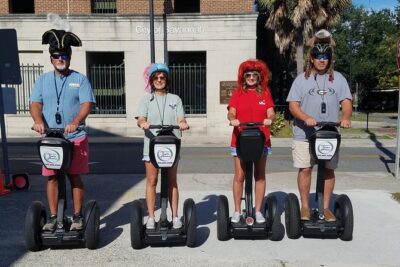
60-Minute Guided Segway History Tour of Savannah
Read our review →
90 Minute Historic Uptown Neighborhood Segway Tour of Charlotte
Read our review →
2-Hour Guided Segway Tour of Huntington Beach State Park in Myrtle Beach
Read our review →Browse the lists this tour appears in