
Review · BARCELONA SEGWAY TOURS
Exclusive Gaudi Segway Guided Tour Architectural Marvels
Barcelona’s Gaudí buildings are striking from the pavement, but a Segway lets you link them with the city’s waterfront, old quarters, parks, and Olympic district without wearing out your feet. This two to three hour ride covers a lot of ground, from the Roman wall at Plaça dels Traginers to Sagrada Família and Casa Batlló.
I like the way the route mixes major sights with less obvious stops, especially Port Vell, Estació de França, and Parc de la Ciutadella. I also like that the guide can ask what interests you most and adjust the emphasis. The main drawback is that many stops last only five minutes, and admission to the interiors is not included.
Key points to know before you book
- The route covers old Barcelona, the waterfront, and Gaudí’s grandest works in one moving tour.
- Bike paths make the Segway practical, giving you easier access to widely separated sights.
- Casa Milà, Casa Batlló, and Sagrada Família are viewing stops, not interior visits.
- The Roman wall and El Born add historic character beyond the better-known Modernisme buildings.
- The tour ends where it begins, at Carrer del Correu Vell in the old city.
- A maximum of 30 people is allowed, so the size of your group may affect how personal the ride feels.
Why a Segway works well in Barcelona
Barcelona is easy to explore on foot in small sections, but its major sights are spread across several districts. The Gothic Quarter, Port Olímpic, Sagrada Família, Passeig de Gràcia, and Parc de la Ciutadella do not form one compact walking circuit. A Segway helps connect them without asking you to spend half the day on public transport.
The route also makes good use of bike paths. That matters because you can move through the city with less concern about cars and without constantly stopping at crowded sidewalks. You still need to follow the guide’s instructions and stay alert, but the riding itself is designed to be accessible to most participants.
The format suits you best if you want an overview before choosing which places deserve a longer visit. You will see the outside of several famous buildings, get a sense of how Barcelona’s districts fit together, and finish with a useful mental map of the center.
This is not a detailed architecture seminar or a ticketed visit inside Gaudí’s buildings. It is a moving introduction, with short stops for photos, orientation, and explanation.
More guided rides in Barcelona
- Barcelona: City Highlights Guided Segway Tour
★ 4.9 · 624 reviews - Barcelona: 2-Hour City Sights Guided Segway Tour
★ 4.9 · 610 reviews - Barcelona: Guided Segway Tour
★ 4.8 · 412 reviews
Starting among Roman stones at Plaça dels Traginers
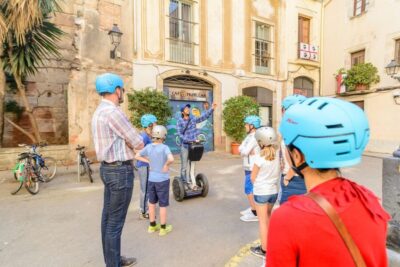
The meeting point is at Carrer del Correu Vell, 6, in Ciutat Vella. From there, the tour reaches Plaça dels Traginers and the Roman wall in the Gothic Quarter.
This is a smart beginning. Before Barcelona became known for Gaudí, beaches, and broad Modernista avenues, it was a Roman city. The surviving wall gives you a quick look at that earlier Barcelona, tucked among narrow streets and medieval buildings.
You only have about 15 minutes here, so expect a concise introduction rather than a full archaeological visit. That short pause works well on a Segway tour. You can look closely at the ancient stones, take photographs, and hear why this small section matters before moving on.
The nearby Passage Colom adds another layer, with historic buildings, shops, and cafes connected to Barcelona’s maritime identity. It is less of a formal attraction than a pleasant urban link, and its value comes from showing how old and modern parts of the city sit side by side.
From Cara de Barcelona to the Port Vell waterfront
The ride continues toward Cara de Barcelona, the large face-like sculpture near the waterfront. You get around five minutes here, enough for a photograph and a quick explanation of the artwork’s place in modern Barcelona.
Next comes Port Vell, where the city opens toward the Mediterranean. The harbor has yachts, promenades, restaurants, and the Maremagnum shopping center. The Columbus Monument is another major reference point in this area, rising near the water and helping you understand the port’s layout.
Port Vell is one of the route’s most useful changes of pace. After the tight streets of Ciutat Vella, you have open views and more room to ride. You can see Barcelona as a port city, not only as a collection of churches and apartment facades.
There is no long free period built into this stop, so plan to return later if you want shopping, a meal, or more time by the harbor. The tour gives you orientation, not a full waterfront afternoon.
Estació de França and the route toward Port Olímpic
Estació de França is worth noticing even if you are not catching a train. Built for the 1929 International Exposition, the station has an impressive exterior with classical and Mediterranean touches. It adds a grand civic building to a route otherwise dominated by Gaudí and seaside attractions.
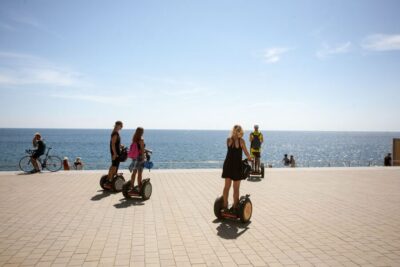
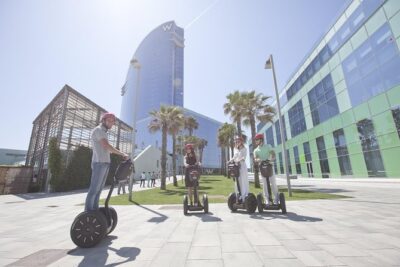
The itinerary then reaches Port Olímpic, created for the 1992 Summer Olympics. This part of Barcelona feels newer and more open, with beaches, palms, marina views, restaurants, bars, and night-time entertainment venues.
You have only about five minutes at Port Olímpic, so the stop is mainly about seeing the area and understanding its role in the city. If you want to swim, eat, or linger by the harbor, you will need to return on your own.
I like this section because it shows two different moments in Barcelona’s growth. Estació de França recalls the city’s grand exhibition era, while Port Olímpic reflects the major changes tied to the 1992 Olympics. The Segway makes the connection between them practical.
More Segway Tours in Barcelona
- Barcelona Segway Tour
★ 5.0 · 680 reviews - Barcelona Segway Tour
★ 4.7 · 630 reviews - Barcelona Guided Tour by Segway
★ 5.0 · 374 reviews - Barcelona: City and Seafront Guided Segway Tour
★ 4.9 · 317 reviews
Plaza de Toros Monumental and Sagrada Família
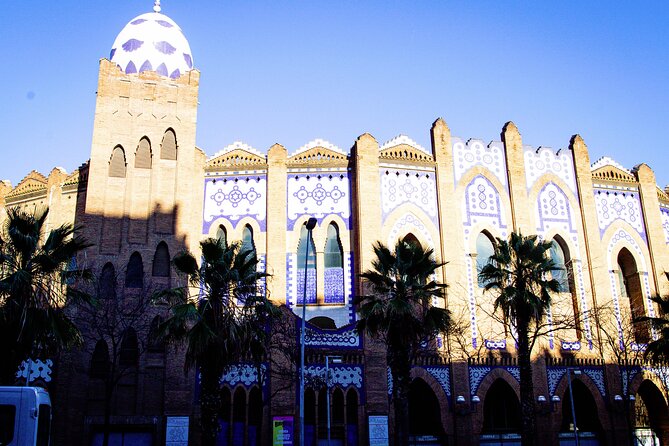
The Monumental bullring provides another quick look at Barcelona’s changing culture. Its Moorish Revival design is easy to recognize, and its history is tied to bullfighting, a tradition that ended at this venue in 2011. Today, the building hosts concerts, exhibitions, and other events.
You will not have time for a full visit inside. Think of it as a photo and context stop, useful for understanding how old cultural symbols can take on new purposes.
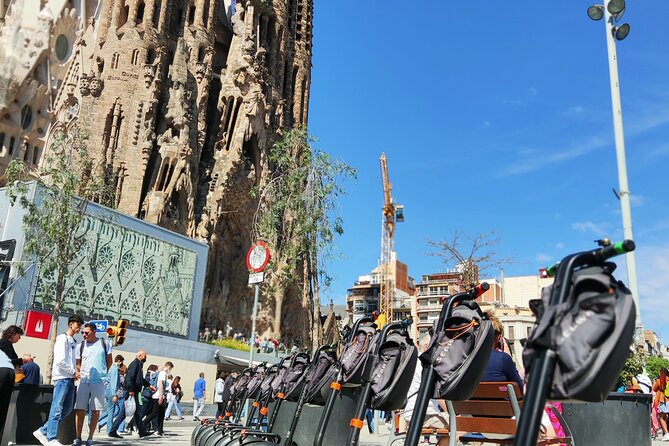
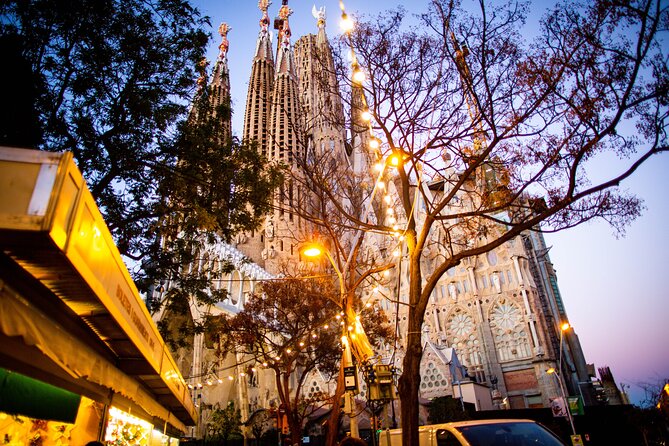
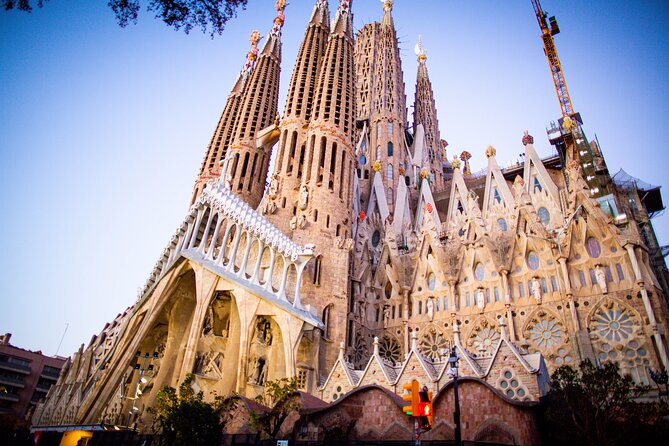
The major highlight is Sagrada Família. Even from outside, the basilica is one of the clearest expressions of Antoni Gaudí’s imagination. Its towers, sculpted facades, religious stories, and natural forms can take up an entire day on their own, so the 15-minute stop naturally serves as an introduction.
The basilica is still under construction, and the work is funded by donations and ticket sales. You will see the continuing building process, but this experience does not include admission. If you want to see the forest-like columns, colored windows, and interior sculpture, book a separate timed entry.
That limitation is important. The Segway tour gives you a useful first look and makes it easy to place Sagrada Família in the wider city. It does not replace a proper basilica visit. I would use this stop to decide whether you want to return for an interior tour.
Gaudí’s Passeig de Gràcia pair: Casa Milà and Casa Batlló
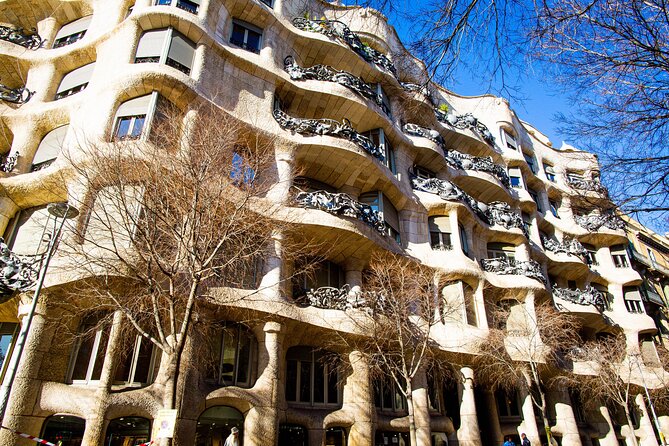
Casa Milà, known as La Pedrera, comes next. Its rolling stone facade, twisting iron balconies, and unusual rooftop chimneys make it easy to identify from the street. The building was completed in 1912 and is one of Gaudí’s best-known residential works.
The five-minute stop is brief, but the outside tells you plenty. Look for the lack of straight, rigid lines and the way the facade seems to move. The rooftop is especially distinctive, though you need a separate ticket to see it and the Espai Gaudí museum inside.
Casa Batlló is another short stop, also lasting about five minutes. Its colorful tilework, curved surfaces, and dragon-like roofline make it one of the most playful buildings on Passeig de Gràcia. Gaudí remodeled it for the Batlló family between 1904 and 1906.
The exterior is the main event during this tour. If you later visit inside, you can see the Noble Floor, loft, and rooftop, where the organic shapes and use of light become easier to appreciate. Here, the guide’s explanation and your viewpoint from the street help you notice details you might otherwise miss.
These two buildings are close enough to compare, which is one of the strongest parts of the route. Casa Milà feels more sculptural and heavy. Casa Batlló feels more colorful and storybook-like. Seeing both in one ride helps you understand that Gaudí did not repeat one formula.
Passeig de Sant Joan and the Arc de Triomf
Passeig de Sant Joan gives you a calmer stretch after the famous facades of Passeig de Gràcia. The boulevard has trees, cafes, shops, and broad pedestrian areas. It is a good place to see how local daily life fits into central Barcelona.
The route then reaches the Arc de Triomf, built as the entrance to the 1888 Barcelona World Fair. Its red brick, sculptures, and welcoming design differ from the military style used by many triumphal arches in other cities.
You have about five minutes here. The arch is easy to photograph, and its position offers a natural gateway toward Parc de la Ciutadella. Depending on the time of day, you might find street performers and people gathering around the promenade, though the tour does not promise a scheduled performance.
Twenty minutes in Parc de la Ciutadella
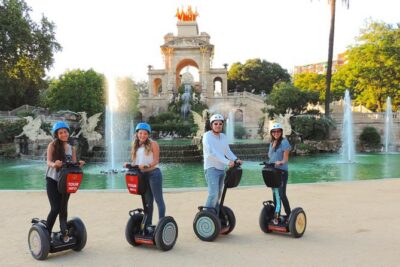
Parc de la Ciutadella is the longest scheduled stop, with about 20 minutes to look around. The park began as a military fortress and later became public space for the 1888 World Fair.
The park’s highlights include the Cascada fountain, created by Josep Fontserè with help from a young Antoni Gaudí, along with gardens, paths, sculptures, a lake, the Catalan Parliament, and Barcelona Zoo. You do not have time to explore every corner, but the pause gives you a welcome break from traffic and stone streets.
This is also one of the better places to appreciate Gaudí’s early contribution without visiting another major building. The fountain is not as famous as Sagrada Família, but it adds useful context to his development as an architect.
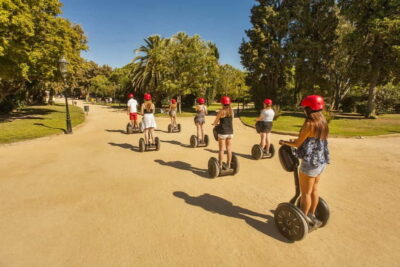
The park stop gives the tour a more relaxed rhythm. After several brief urban pauses, you have space to look around and take in greenery. If you want a quiet picnic or a full visit to the zoo, save that for another time.
El Born and the ride back to Ciutat Vella
The final area is El Born, a medieval neighborhood with narrow streets, small squares, boutiques, cafes, galleries, and tapas bars. Its character is different from the Gothic Quarter, though both reward slow exploration.
Santa Maria del Mar is one of the area’s major landmarks, and the Picasso Museum is nearby. Neither is a formal interior visit on this tour, but the guide can help place them within the neighborhood.
El Born is a good ending because it brings you back to Barcelona’s older center after the wide avenues and waterfront. You finish at the original meeting point, making it easy to continue with dinner, a museum visit, or a walk through Ciutat Vella.
What the $75.19 price really buys you
At $75.19 per person, this is not a bargain sightseeing loop, but the price can make sense if you value coverage and convenience. You are paying for the Segway, the guide, route planning, and the chance to connect districts that would take much longer on foot.
The value is strongest during a first visit, especially if you have limited time and want to identify places for later visits. It is weaker if your main goal is to spend hours inside Sagrada Família, Casa Milà, or Casa Batlló. Those tickets are not included, and the stops are too short for a serious interior visit.
Group discounts may improve the cost for larger parties. The stated maximum is 30 people, which is worth considering. A large group can make explanations and street crossings feel less personal, while a smaller departure may give you more chances to ask questions.
One useful detail is the guide’s flexibility. The guide can ask what interests you most and adjust the focus, so tell them early if architecture, Roman Barcelona, the waterfront, or the Olympic district matters most to you.
Practical details, weather, and cancellation
The experience lasts about two to three hours and requires good weather. Wear comfortable clothing and shoes suitable for standing and riding. The route passes through city streets and bike paths, so pay attention to the guide and the surrounding traffic.
Confirmation is provided at booking, and the meeting point is near public transportation. Most people can participate, but the supplied information does not list specific Segway training details or restrictions. Ask the operator directly if you have concerns about balance, mobility, or riding comfort.
You can cancel for a full refund up to 24 hours before the start time. Cancellations or changes made inside that 24-hour window are not refunded or accepted. If poor weather forces cancellation, you will be offered another date or a full refund.
Who should book this Barcelona ride?
I would recommend it to first-time visitors who want a broad introduction without spending the day underground on trains. It is also a good fit for people who enjoy active sightseeing, like the idea of covering many neighborhoods, and want a guide to point out details while they ride.
Families and groups may appreciate the fun factor and the option of a group discount, though the maximum group size means the experience may not feel intimate. Architecture fans should book it as a street-level overview, then add separate tickets for the interiors that matter most.
I would skip it if you prefer slow museum visits, dislike riding equipment, or already know Barcelona well. Walking tours give you more time in the old quarters, while dedicated Gaudí tours usually offer better detail inside the buildings.
Should you book the Exclusive Gaudí Segway Guided Tour?
Book it if you want to see a lot of Barcelona in one outing and like the idea of moving between ancient walls, waterfront districts, Olympic sites, parks, and Modernisme buildings. The guide’s ability to adjust the focus is useful, and the bike paths make the route more workable than a long walking circuit.
Go in with the right expectations. This is a fast, outdoor overview, not a series of full visits. The best plan is to use the ride to choose your priorities, then return to Sagrada Família, La Pedrera, or Casa Batlló with separate admission for a closer look.
FAQ
How long does the Segway tour last?
The experience lasts approximately two to three hours.
Where does the tour begin and end?
It begins at Carrer del Correu Vell, 6, in Ciutat Vella, Barcelona, and ends back at the same meeting point.
Are admission tickets to Sagrada Família, Casa Milà, and Casa Batlló included?
No. Admission is not included for these attractions, so the tour focuses on exterior views and brief stops.
How large can the group be?
The activity has a maximum of 30 participants.
Is the tour canceled in bad weather?
The experience requires good weather. If poor weather causes cancellation, you will be offered a different date or a full refund.
What is the cancellation policy?
You can cancel at least 24 hours before the start time for a full refund. Cancellations or changes made less than 24 hours before the start time are not accepted, and the amount paid will not be refunded.
Newest segway tours in Barcelona
- Welcome to Barcelona Segway and eScooter Tour★ 5.0 · 2 reviews
- Seaside Segway Tour in Barcelona★ 5.0 · 33 reviews
- Segway Flexible Private Tour in Barcelona★ 5.0 · 16 reviews
- Sagrada Familia Segway Tour★ 5.0 · 12 reviews
- Barcelona: Montjuïc Segway Tour★ 5.0 · 64 reviews
- Segway Tour to Sagrada Familia views★ 5.0 · 5 reviews
- Highlights of Barcelona Segway Tour★ 5.0 · 41 reviews
- 2hr Montjuïc Castle Segway Tour★ 5.0 · 5 reviews
Barcelona Segway Tours, compared.

Browse the lists this tour appears in