
Review · BARCELONA SEGWAY TOURS
Sightseeing Segway Tour in Barcelona
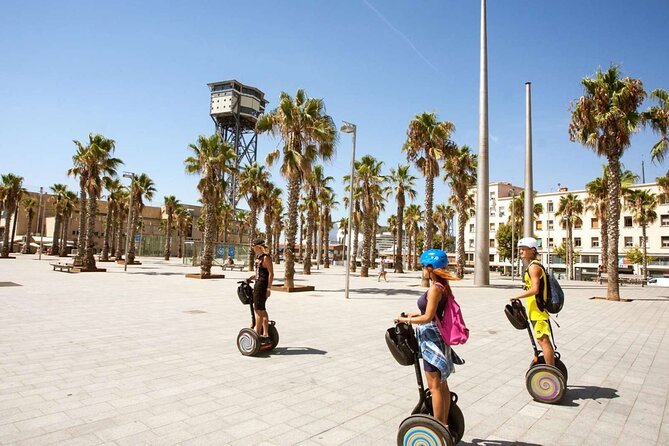
Barcelona is a city made for seeing from the street, and a Segway lets you cover a surprising amount of it without wearing out your feet. You begin near the ancient Roman Wall, get a short lesson, then glide through the Gothic Quarter, Ciutadella Park, Port Vell, Barceloneta, and parts of the Olympic waterfront.
I especially like the mix of old and new: Roman defenses, Gothic churches, Modernist exhibition buildings, beaches, and Olympic architecture all fit into one moving tour. I also like the patient instruction. Guides including Pablo, Philippe, Philip, Carlos, Lucas, and David have been singled out for friendly coaching, useful history, and good local suggestions.
The main catch is time. A one-hour outing can only skim this long route, and the many listed stops are mostly brief photo pauses rather than full visits. You also need to arrive at the right office, allow extra time to find Carrer del Correu Vell, and meet the age and weight rules before booking.
Key points at a glance
- Roman beginnings: Start beside Barcelona’s ancient Roman Wall in the Ciutat Vella.
- Three distinct city zones: Ride from the Gothic Quarter to Ciutadella Park and onward to the waterfront.
- Useful first-day overview: This is a smart way to see key areas before choosing where to return on foot.
- Easy beginner training: A short practice session comes first, and helmets are supplied in every size.
- Good for limited time: The tour covers far more ground than a walking route of the same length.
- Important restrictions: Segway riders must be at least 16 under local law, weigh 45 to 117 kilograms, and wear a helmet.
Why this Segway route works well in Barcelona
Barcelona can feel compact on a map, but its sights are spread across several districts. The Gothic Quarter, Ciutadella Park, Port Vell, Barceloneta, and Vila Olímpica each have a different character. On foot, reaching all of them takes time. By Segway, you can connect them in one outing.
The route is best understood as a moving introduction rather than a series of museum visits. You will pause for explanations, photographs, and views, but you will not enter the Catedral de Barcelona, Museu d’Història de Catalunya, Santa Maria del Mar, or other buildings. That keeps the tour quick and helps you see more, but you should plan separate visits if you want interiors.
The tour is offered in English, though it may be operated by a multilingual guide. The strongest part of the experience is likely to be the guide’s handling of the group. Several guides have been praised for patience during training, clear explanations, humor, and practical ideas for the rest of your stay.
More Segway City Tours in Barcelona
- Barcelona: City Highlights Guided Segway Tour
★ 4.9 · 624 reviews - Barcelona: 3-Hour Segway Sightseeing Tour
★ 4.8 · 101 reviews - Barcelona: City Highlights Segway Tour
★ 4.9 · 60 reviews
Getting started near the Roman Wall
The meeting point is Carrer del Correu Vell, 6, in Barcelona’s Ciutat Vella. The route begins near the old Roman Wall, a useful place to start because it puts you straight into the city’s oldest quarter rather than a modern commercial district.
Allow extra time to locate the office. One useful warning is that the practice area and the nearby check-in office may not be exactly the same place, so read the meeting instructions carefully. Arriving 15 to 20 minutes early is sensible, especially if you are unfamiliar with the narrow streets of the old town.
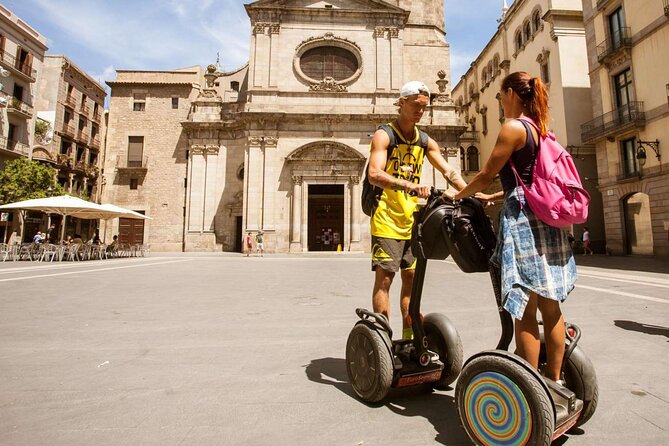
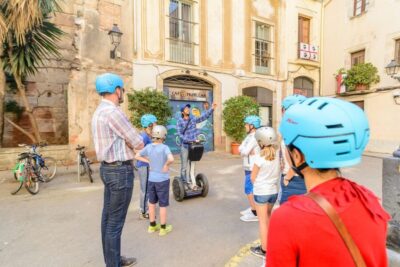
Your guide provides a helmet, which is mandatory, and gives you a short lesson before the group sets off. The Segway is designed to respond to your balance and body movement, and the training is intended to get beginners gliding quickly. If you feel nervous, say so. Guides such as Philippe, Lucas, and Philip have been praised for taking time with first-time riders.
The group can include up to 18 people, though some outings have been divided into smaller groups of about six. The exact size may affect how often you stop and how closely you stay with the guide. A private option is available if you want more personal attention or a more flexible pace.
From Gothic stones to the Arc de Triomf
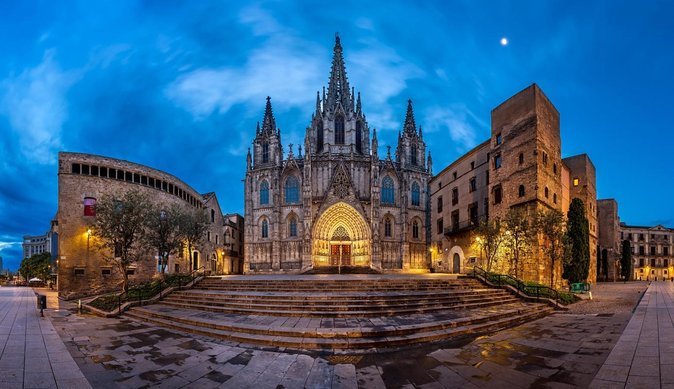
The opening section moves through the Gothic Quarter, where narrow streets and grand façades make for a strong first impression. You pass the Roman Wall and the Gothic exterior of Barcelona Cathedral. These are quick orientation stops, not formal tours, so listen closely when the guide explains what you are seeing.
The route then heads toward the Arc de Triomf. Built for the 1888 Universal Exhibition, the red-brick gateway marks the entrance to the old town and leads along Passeig de Lluís Companys. The broad, tree-lined promenade is much easier for a Segway than the tight lanes of the Gothic Quarter.
I like this change in setting. You begin among ancient walls and Gothic stone, then move into a grand ceremonial avenue. It gives you a quick lesson in how Barcelona expanded and presented itself to the world in the late 19th century.
Ciutadella Park, from the Cascada to the lake
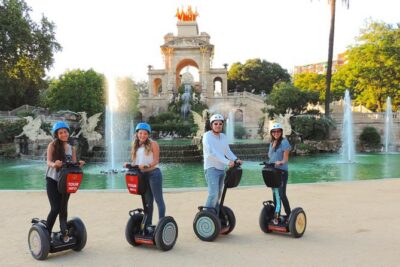
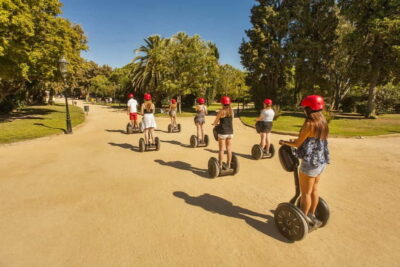
Parc de la Ciutadella is the green center of this portion of the ride. You may spend around 20 minutes in the park, though the overall timing depends on the tour length and group pace. The park was designed in the 19th century and includes gardens, monuments, exhibition buildings, and the main lake.
The Cascada Monumental is one of the most worthwhile pauses. Its grand fountain offers a good photo stop and links the park to the 1888 exhibition era. Nearby, you pass the Parliament of Catalonia, housed in a former 18th-century arsenal with a red-and-gold façade.
The route also points out Plaça de Joan Fiveller and the equestrian statue of General Joan Prim. These are short stops, but they add political and civic context to the park. The point is not to study each monument at length. It is to help you recognize the major pieces when you return for a slower walk.
The Castell dels Tres Dragons is another highlight. Lluís Domènech i Montaner designed this castle-like Modernist building for the 1888 exhibition. Its towers and red brick make it one of the park’s most memorable exteriors.
You may also see the Hivernacle, a glass-and-iron greenhouse, and the Umbracle, a shaded structure built for tropical and subtropical plants. The nearby Jardins Fontserè i Mestre connect the park’s design with Josep Fontserè and the young Antoni Gaudí. These places are easy to miss on a fast city visit, so the Segway route earns its keep here.
The Gran Lago, or main lake, provides a calmer pause. The lake, gardens, small islands, and nearby fountain create a pleasant break from traffic. The Stork and Fox Fountain adds a small piece of storytelling based on one of La Fontaine’s fables.
Other brief points include a 1983 tribute to Picasso and the David and Goliath sculpture. They are not major stops by themselves, but together they show how the park mixes civic monuments, art, and leisure space.
More Segway City Tours in Spain
- Barcelona Top Highlights Segway Tour
★ 5.0 · 58 reviews - Montjuic Panoramic Segway/e-Bike Tour
★ 5.0 · 48 reviews - Highlights of Barcelona Segway Tour
★ 5.0 · 41 reviews - Barcelona: Gaudí Sightseeing Guided Segway Tour
★ 4.8 · 32 reviews
El Born and the waterfront history
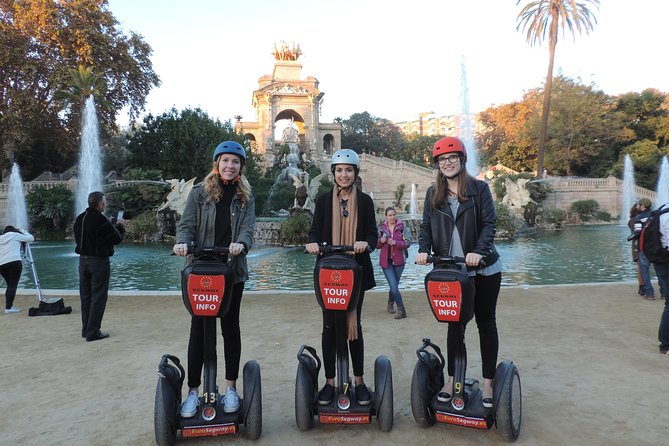
After Ciutadella Park, the route passes through El Born. El Born Centre de Cultura i Memòria occupies a restored 19th-century market building and preserves archaeological remains from the 1700s. You may have only about five minutes here, and admission is not included, but the exterior and location are worth noting for a later visit.
The Basílica de Santa Maria del Mar is another quick stop. This Catalan Gothic church is known for its clean proportions and stained glass. Since the tour does not include entrance, treat the pause as an introduction. If the building interests you, return on foot when you can spend time inside.
You then pass Estació de França, one of Barcelona’s grand railway stations. Its iron-and-glass roof, marble details, and classical and Modernist touches make it an attractive architectural stop even if you have no train to catch.
Near the harbor, the Baluard de Migdia and Muralla de Mar offer a look at Barcelona’s old defenses. Casa Llotja de Mar, once a merchants’ exchange, recalls the city’s commercial past. The Correus building adds another civic landmark, with an ornate façade combining classical and Modernist elements.
This section is where the guide’s narration matters most. The route moves quickly, and the buildings can blend together if you do not know what to look for. A good guide helps turn passing façades into a basic map of Barcelona’s growth.
Port Vell, Columbus, and the sea breeze
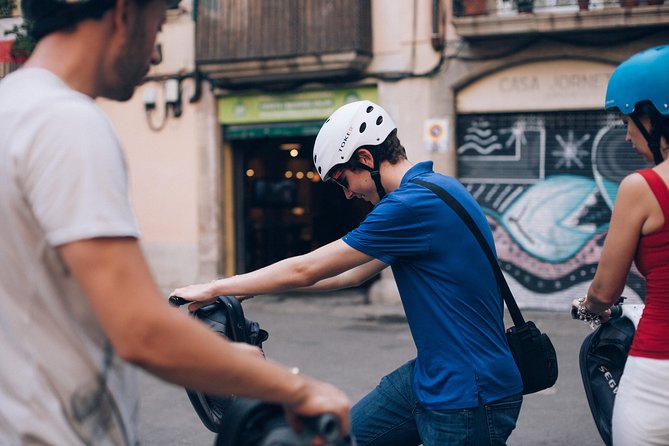
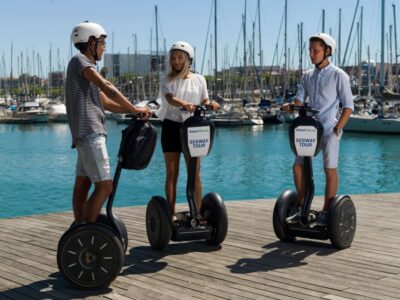
The route reaches Port Vell, the old harbor, after leaving the Roman Wall area. The waterfront has been redeveloped with promenades, restaurants, shops, the Maremagnum complex, and the Barcelona Aquarium. It is a more open setting after the enclosed Gothic streets.
The Columbus Monument marks the lower end of La Rambla. Built for the 1888 Universal Exhibition, its tall column and sea-facing statue are among the city’s best-known sights. The stop is short, usually around two minutes, but it helps orient you between the old town and the harbor.
You may also pass La Cara de Barcelona, the colorful pop-art sculpture by Roy Lichtenstein, and Plaça de la Mercè. The contrast is useful: Barcelona is not only medieval lanes and Gaudí buildings. Public art, civic structures, and harbor redevelopment are part of the city too.
The route continues past the Museu d’Història de Catalunya, housed in the Port Vell area. Admission is not included, and the pause is brief, so save it for another visit if you want a fuller look at Catalan history.
Barceloneta and the Olympic waterfront
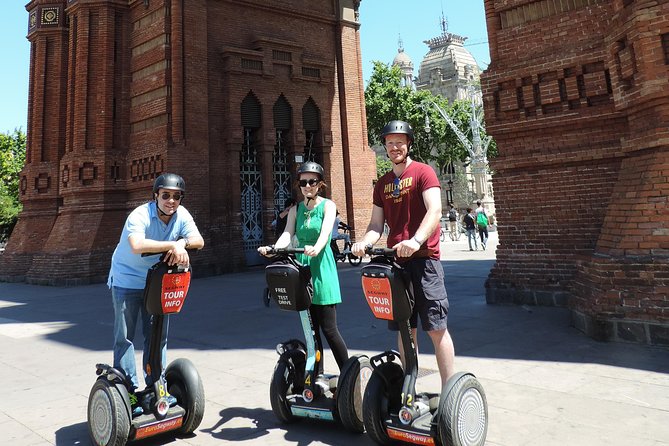
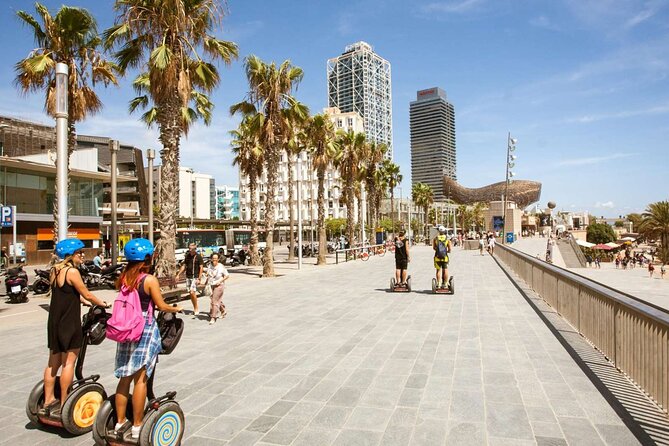
The seaside section passes through Barceloneta, once a fishing neighborhood and now a popular area for seafood, beaches, and waterfront walks. You see the Torre del Rellotge, an 18th-century clock tower connected with the port’s maritime past.
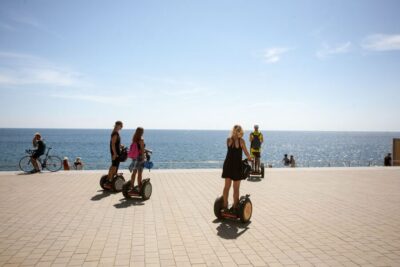
The ride may continue along Barceloneta Beach and Sant Sebastià Beach, then toward the Mediterranean viewpoint and Somorrostro Beach. These stops are mostly brief, but the open shore gives you a welcome change of pace. On a warm day, the breeze can make the ride especially pleasant. In poor weather, the operator supplies raincoats, though bringing your own is still sensible.
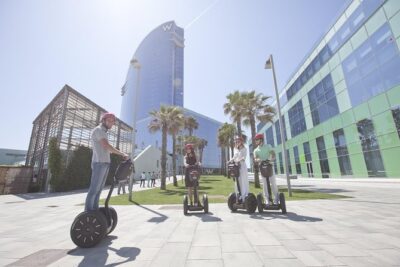
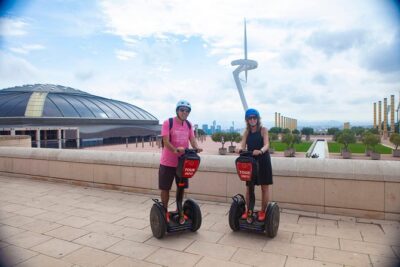
Further along, Vila Olímpica recalls the transformation linked to the 1992 Olympic Games. Wide avenues, modern housing, open public spaces, and the marina give this part of Barcelona a different feel from the old town.
Plaça dels Campions, Nova Icària Beach, and the David and Goliath sculpture are included as short points of interest. The route ends at Moll de Bosch i Alsina in the Port Vell area before returning to the original meeting point.
This coastal stretch is one reason to choose a longer option. A one-hour tour may focus on the Gothic Quarter and Ciutadella Park, while a longer ride can reach the beaches and Olympic waterfront. Ask about the exact route before setting off, since routes can change because of road conditions or other interruptions.
What the $35 price really buys you
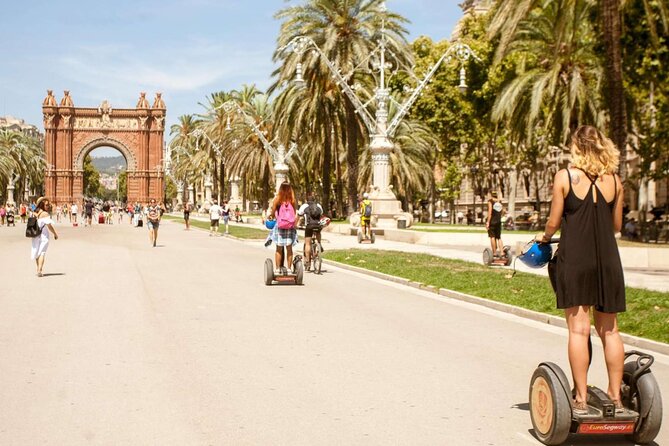
At about $35 per person, the tour is good value if you want an overview and have limited time. You are paying for instruction, a guide, helmet rental, bottled water, and the ability to cover several districts without arranging your own route.
The value is strongest on a first day in Barcelona. You can see places such as Santa Maria del Mar, Port Vell, Barceloneta, and Ciutadella Park, then decide which deserve a longer return visit. It also suits anyone who finds extensive walking tiring but still wants to see outdoor sights.
The price is less attractive if you expect long visits at each landmark. The tour does not include museum or building admission, and many listed stops last only one or two minutes. Think of it as transport with interpretation, not a collection of guided indoor tours.
Group discounts and private tours are available. A private outing may be worth considering for families, couples, or anyone who wants more time for questions and photographs.
Who should book, and who should think twice
This tour suits first-time visitors, families with teenagers, couples, and people with only a short stay. The minimum booking age is 12, but local law requires Segway riders to be at least 16. Underage participants are given electric bicycles suited for children, at the same tour price.
You must weigh at least 45 kilograms and no more than 117 kilograms to ride a Segway. Children must be accompanied by an adult. Most people can participate, but comfortable clothing and shoes are important, since you will be outdoors in all weather.
I would choose the tour if you want a fun orientation, prefer moving through a city to walking through it, or need to see several districts quickly. I would skip it if your main goal is detailed architecture study, museum time, or quiet exploration of the Gothic Quarter.
The tour operates in rain as well as fair weather, with raincoats supplied. Severe weather may lead to a different date and time. Free cancellation is available up to 24 hours before the start, but cancellations or changes inside that window are not refunded or accepted.
My practical verdict
Book this if you want a lively first look at Barcelona and like the idea of covering old streets, parks, harbor views, and beaches in one outing. The careful training and patient guides make it approachable for beginners, while the route gives you plenty of ideas for the rest of your stay.
Choose a longer option if seeing the waterfront matters to you. Choose a private tour if you value personal coaching and a slower pace. For the best use of your time, arrive early, wear comfortable shoes, check the exact meeting office, and treat the ride as an overview that points you toward the places worth exploring on foot later.
FAQ
How long does the Barcelona Segway tour last?
The experience lasts approximately one to three hours, depending on the option selected.
Where does the tour begin?
The meeting point is Carrer del Correu Vell, 6, in Ciutat Vella, Barcelona. The tour returns to the same meeting point.
What sights are included?
The route can include the Roman Wall, Barcelona Cathedral, Ciutadella Park, Arc de Triomf, El Born, Santa Maria del Mar, Port Vell, Barceloneta, the city beaches, and Vila Olímpica.
Is Segway training provided?
Yes. The guide provides a short training session before the group leaves, and helmets are included and mandatory.
What is the minimum age?
The minimum age to participate in the tour is 12. Under local law, participants must be at least 16 to ride a Segway. Younger participants are provided with suitable electric bicycles.
Is there a weight limit?
Yes. Segway riders must weigh at least 45 kilograms and no more than 117 kilograms.
Is admission to museums and buildings included?
No. The tour does not include entrance to museums or other buildings. Stops are mainly exterior viewing points and short photo pauses.
What happens if it rains?
The tour operates in all weather conditions, and raincoats are provided. In severe weather, an alternative date and time may be offered.
Can I cancel the booking?
You can cancel at least 24 hours before the local start time for a full refund. Cancellations or changes made less than 24 hours before the start are not refunded or accepted.
Newest segway tours in Barcelona
- Welcome to Barcelona Segway and eScooter Tour★ 5.0 · 2 reviews
- Seaside Segway Tour in Barcelona★ 5.0 · 33 reviews
- Segway Flexible Private Tour in Barcelona★ 5.0 · 16 reviews
- Sagrada Familia Segway Tour★ 5.0 · 12 reviews
- Segway Tour to Sagrada Familia views★ 5.0 · 5 reviews
- Highlights of Barcelona Segway Tour★ 5.0 · 41 reviews
- Barcelona: Montjuïc Segway Tour★ 5.0 · 64 reviews
- 2hr Montjuïc Castle Segway Tour★ 5.0 · 5 reviews
Barcelona Segway Tours, compared.
Browse the lists this tour appears in